
Key takeaways
- Ecommerce peak season prep should include: creating a dedicated area for outbound packages, pairing workers for pack and ship teams, implementing a dynamic storage system, installing monitors to display key performance indicators (KPIs), and adding breaks to long pick faces.
- The UK-based fashion brand Hype has successfully used these strategies with the Descartes Peoplevox warehouse management system (WMS) to process 3,000+ orders daily during peak seasons.
- No matter what time of year your peak season occurs, start planning and optimising your warehouse several months in advance. Put these tips to work right away.
In the summer months, countless fashion brands around the world are gearing up for a hectic ecommerce peak season. With Black Friday, Cyber Monday, and Christmas chaos around the corner, it’s time to fine-tune your plans.
However, for fashion brand Hype, our long-term customer based in Leicester, UK, peak always starts during ‘Back to School’ season. That means they were already pumping out 3,000+ orders a day when we dropped in to tour their exemplary warehouse.
Hype generously shared some expert insights about how to handle peak order volumes. Here’s what we learned.
5 Ecommerce peak season warehouse tips:
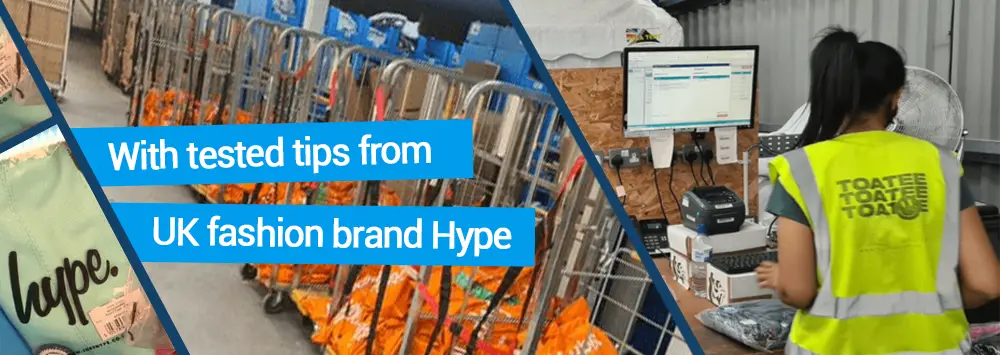
As a brand that has grown remarkably over the past decade, Hype successfully navigated the pains of scaling warehouse operations. Now a household name in the UK and worldwide, they manage peak order fulfilment like seasoned pros. Here are the tips they shared:
- Stage a dedicated area for ‘shipped’ orders
- Work in pairs to double your packing speed
- Use dynamic storage to make best use of your locations
- Get display screens to track your progress
- Leave breaks in your pick face aisles
1. Stage a dedicated area for 'shipped' orders
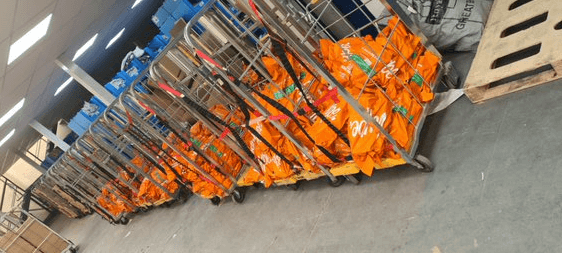
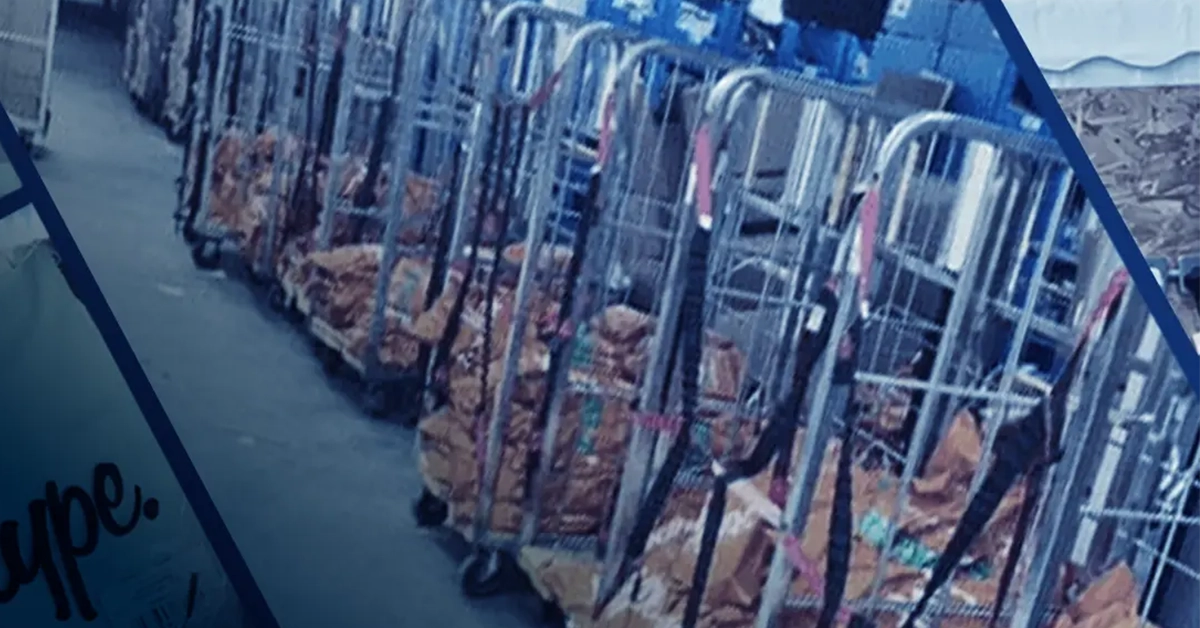
Hype created a dedicated staging area for outgoing orders. Workers keep a number of these high-volume wheeled trolleys on hand to store their ‘dispatched’ or ‘shipped’ orders. When the courier arrives for pickup, they are taken straight over to the van for loading.
Problems solved:
- Inefficiency: Workers always know where things are and don’t waste time or effort.
- Clutter: Packaged orders no longer clutter work surfaces around the shipping station.
- Lost packages: All packages stay organised instead of sitting in precarious piles.
- Shipping delays: Shipments are ready to load when the courier arrives for pickup.
2. Work in pairs to double your packing speed
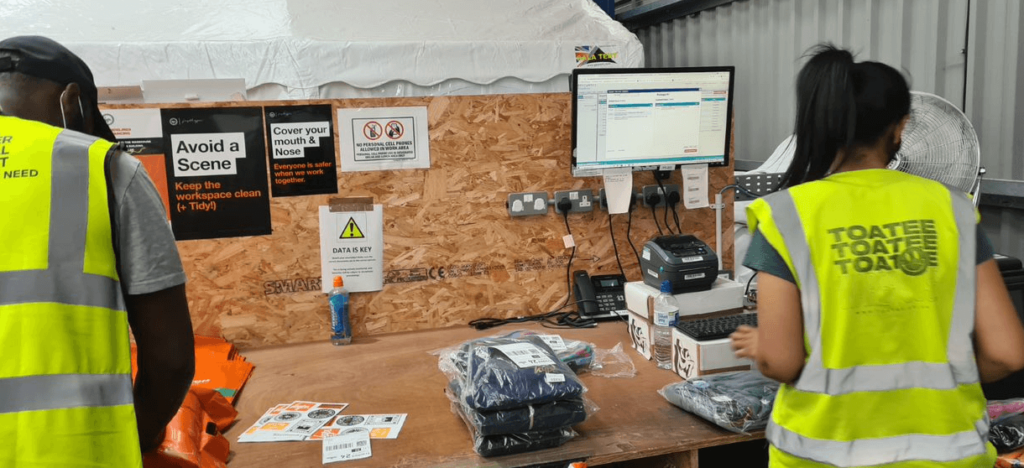
During ecommerce peak season, Hype puts warehouse team members in pack-ship pairs to process orders faster. In the image above:
Worker 1 (on the right side):
- Uses the Descartes Peoplevox WMS on a desktop computer to dispatch orders.
- Scans each of the items included in one order.
- Generates the shipping label via the Metapack integration and prints it.
- Passes the items and shipping label to her colleague on the left.
- Starts the next order.
Worker 2 (on the left side):
- Packs the items into a Hype mailer parcel.
- Affixes the shipping label.
- Moves the parcel to the ‘outgoing shipments’ trolley.
- Starts the next order.
What is the fastest way to pack and ship an order?
The fastest way to pack and ship an ecommerce order is to split workflows for dispatch/label generation and pack order/affix label across two people. This allows both team members to work in a faster rhythm and double your ‘orders dispatched’ rate without needing more users on the warehouse management system.
Learn more about picking and packing best practices.
3. Use dynamic storage to make the best use of your locations
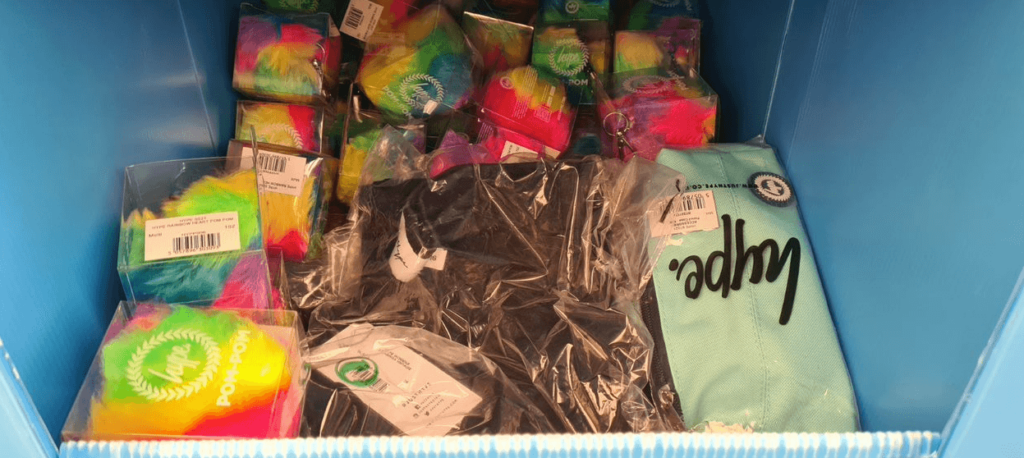
Hype uses dynamic storage to keep a mixed range of popular SKUs in a single, easily pickable location. It’s a warehouse strategy Amazon leaders have been using for years, and it lives up to the hype. (See what we did there?) They place the fastest-moving SKUs near the pack and ship station to reduce walking time.
What is dynamic storage in a warehouse?
Dynamic storage, also known as chaotic storage, is a barcode-based warehouse storage system that allows multiple SKUs to be stored in the same pick location, such as a bin or pick face.
How it works:
- Assign and affix a unique, scannable barcode to each bin and a unique SKU to each product or bundle.
- Implement a WMS with barcode scanning hardware, such as Android mobile devices.
- During inventory putaway, workers scan the SKU and bin barcode to record the location of each item. It’s okay to mix SKUs in a single location.
- During order picking, the WMS retrieves the stored information and guides the picker to the correct location.
- The picker retrieves the item, scans it, and scans the bin barcode to log the pick activity. This updates the SKU count for that location in the WMS.
What are the benefits of dynamic storage?
- Storage optimisation: Dynamic storage allows workers to store more items in existing warehouse space by storing mixed SKUs in each location.
- Flexible pick locations: Move popular SKUs closer to the pack stations according to sales trends and promotional events; support faster fulfilment.
- Faster inventory putaway: Put items wherever they fit instead of searching for a static storage location.
- Reduce human errors: Prevent mis-picks with barcode scanning and built-in pick validation that flags errors.
Learn more about dynamic storage.
4. Get display screens to track your progress
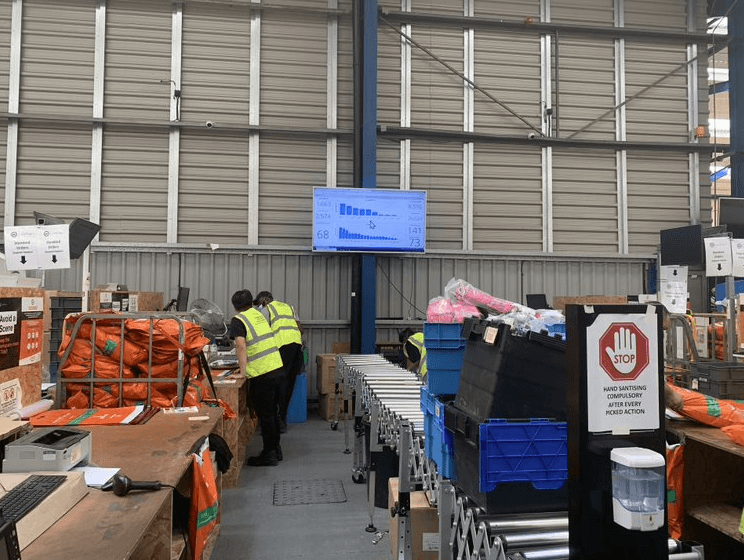
Hype places display screens in prominent locations to share warehouse KPIs. Everyone can see Hype’s peak season customer experience journey, order by order. It helps management see how things are progressing at a productivity level and incentivises the pick, pack, and ship team members to compete against each other in a positive working environment.
Which warehouse KPIs does Hype display?
Hype displays warehouse KPIs from their Descartes Peoplevox WMS dashboards. Key metrics include:
- Number of orders dispatched for the day. Builds team morale, fosters healthy competition, and shows progress toward daily goals.
- Number of items to pick to meet delivery timelines. Keeps the team focused on results, identifies bottlenecks, and helps managers allocate resources.
- Number of Amazon orders still needing to be dispatched. A crucial metric to maintain their excellent reputation as an Amazon Seller-Fulfilled Prime (SFP) vendor.
What other warehouse KPIs matter for peak season?
Depending on your team’s peak season goals, you may want to display warehouse KPIs related to fulfilment speed, accuracy, and timeliness. Use these KPIs to benchmark performance and troubleshoot in real-time:
- Average return processing time. Shows how long it typically takes a worker to receive, process, and relist a returned item for sale.
- Order accuracy rate. Shows the percentage of total orders that you perfectly fulfilled.
- Average pick time per order. Measures average picking speed performance.
- On-time ship rate. Indicates how often your business met shipping deadlines.
See more warehouse KPIs.
5. Leave breaks in your pick face aisles
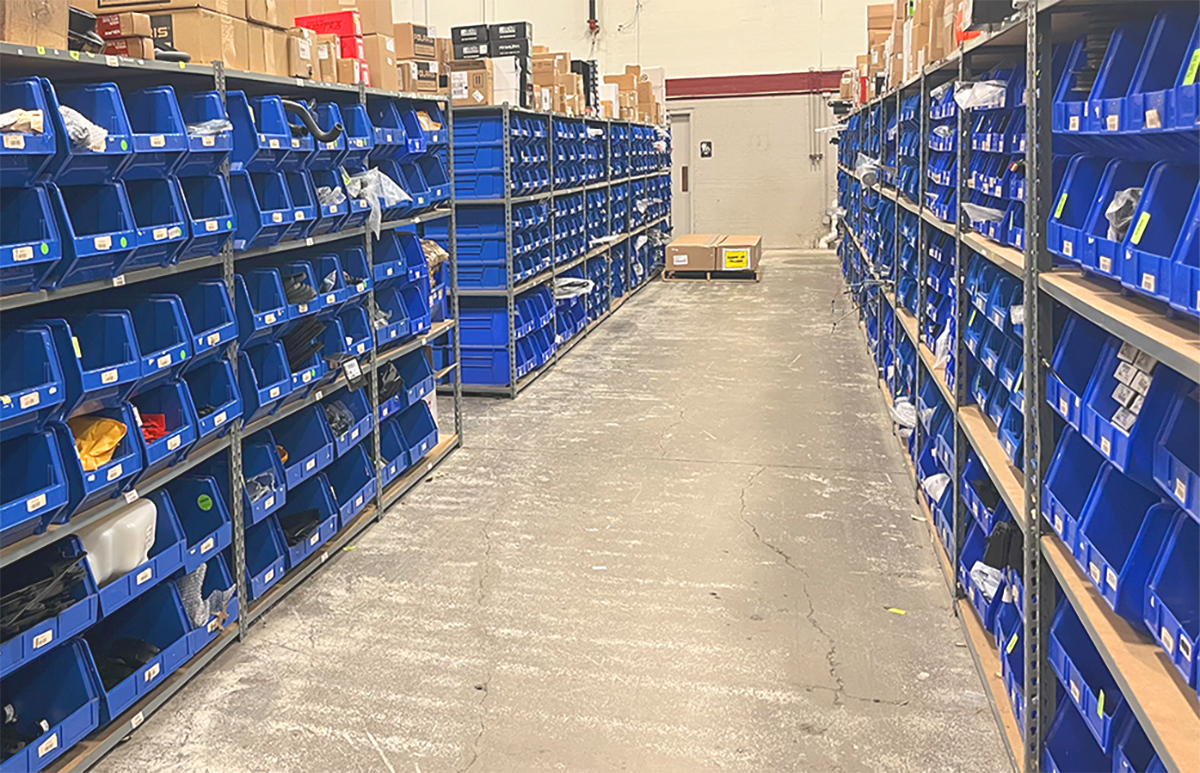
Hype builds gaps into pick faces to create shortcuts from aisle to aisle. Why is this one of the best time-saving tricks?
Hype shares: “If you have long aisles of continuous pick face, but your picker only needs to get one item from that aisle before moving to the next aisle, these gaps are a lifesaver and a massive time saver. Without them, we had to walk all the way from one end to the other. If you multiply this by hundreds of items and pickruns, you are adding hours and hours to the time spent walking. It takes time away from getting complete sets of orders back to pack.”
Learn more about how to design your warehouse layout.
More peak season warehouse tips
We hope you enjoyed this inside look at Hype’s warehouse operations. For more peak season warehouse tips and a free downloadable pre-peak checklist, check out our comprehensive Peak Season Warehouse Optimization Guide.
Ecommerce Peak Season Prep FAQs
How early should you start preparing your warehouse for peak season?
You should begin planning several months in advance. This gives you time to test processes, train staff, and make layout or system changes before order volumes increase.
What role does warehouse layout play during peak season?
An efficient layout reduces unnecessary movement and speeds up picking. Small changes, such as optimising aisle flow or repositioning fast-moving products, can significantly improve productivity.
How can you maintain accuracy when order volumes increase?
Using barcode scanning and structured workflows helps reduce human error. Clear processes and system validation ensure items are picked and packed correctly, even under pressure.
Should you hire more staff or optimise existing workflows for peak season?
While additional staff can help, improving workflows often delivers better long-term results. Streamlined processes allow your existing team to handle higher volumes more efficiently.