

Key takeaways
- Fashion ecommerce warehouses succeed when you prioritise accuracy, clear organisation, and real-time visibility across every workflow.
- Barcode scanning, location planning, and zoning help your pickers move faster and reduce costly errors caused by similar-looking SKUs.
- Managing capacity effectively means planning for high SKU counts and frequent, smaller order volumes.
- The right warehouse management system helps you handle small order picking, automate repetitive tasks, and quickly train seasonal staff during peak periods.
If you run a fashion brand, you know how much effort goes into the warehousing of clothes, not to mention keeping your high-street stores in top shape. Labor costs, physical space, and ongoing upkeep all matter. You must control operational costs while offering a high-end shopping experience, with customer gratification driving repeat purchases.
When you operate as an online fashion retailer such as AYBL Group or MESHKI, order fulfilment speed and accuracy shapes the customer experience. You don’t see customers face-to-face, but you are responsible for delighting them with accurate, on-time order fulfilment. To achieve this, you need to master the warehousing of clothes, managing your distribution centre and fulfillment process with precision, especially during peak seasons.
Here are five time-tested tips we have gathered from successful ecommerce fashion warehouses:
Tip 1: Boost fulfilment accuracy with barcode scanning
For most online fashion businesses, your clothing and accessories require a system-driven approach to order fulfilment. As inventory moves through your warehouse, it needs to be tracked closely at every stage. With the right systems in place, accuracy levels close to 100 percent are achievable.
This level of accuracy matters because it helps you stay in control of your stock. When your inventory data is reliable, you reduce the risk of selling items that are no longer available. That protects your customer experience and prevents avoidable fulfilment issues.
Tip: If accuracy issues are holding you back, see how a barcode-based system supports real-time tracking across your warehouse.
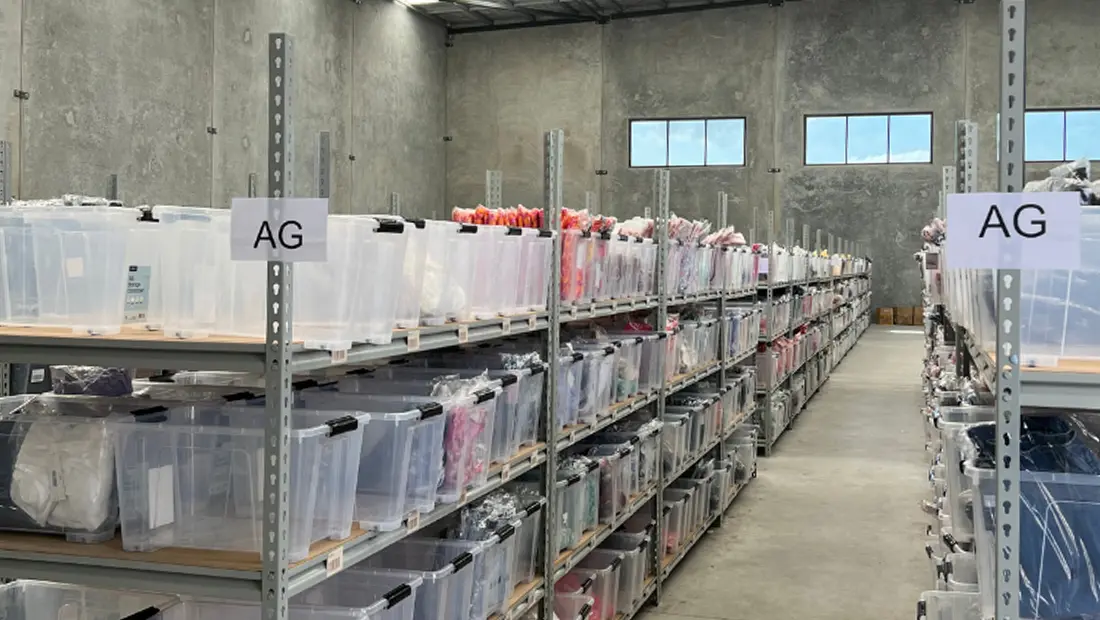
Amaroso Boutique experienced this transformation first-hand. After relying on manual processes that led to frequent errors, they implemented Peoplevox, eliminating mis-picks while improving speed and scalability. With barcode scanning in place, the team confidently reduced human error and boosted overall fulfilment quality.
Tip 2: Improve picking speed with clear, zone-based locations
If inventory is stored in a single location, finding products quickly becomes difficult. Instead, store products across multiple locations using zone-based storage. This improves picking efficiency and allows you to maximise storage space in your warehouse. For your pickers, correct location data is delivered through a mobile WMS with guided pick routes.
When you implement zone-based storage and picking, you can unlock noticeable improvements in both accuracy and stock control.
In fashion warehouses, items are typically organised into zones based on storage type. For example:
- Shoes are stored in dedicated shoe racks
- Dresses are hung
- Accessories are placed in smaller bins
Within each zone, you will often keep clothing of the same size in a single location, with multiple units stored together. Placing visually distinct items next to each other makes picking easier.
If your pink 34C bras sit next to black gloves, your pickers can tell them apart instantly and move faster with confidence. In contrast, you don’t want pickers digging through a shelf of multi-sized black tee shirts, reading shirt labels to find a size Large.
Tip: Clear, zone-based location strategies make it easier for your team to pick accurately as volume grows.
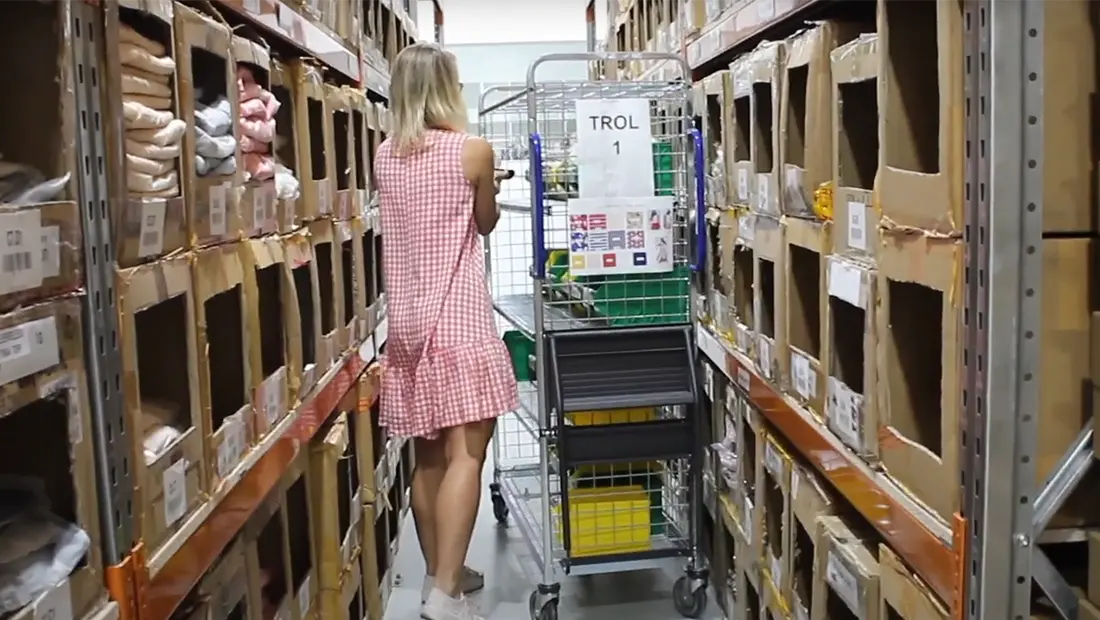
At Mister Zimi, zone-based logic introduced through Peoplevox helped turn chaos into control. After moving away from their 3PL and regaining in-house control, they used zoning to streamline picking and eliminate fulfilment errors. This structured approach has helped them scale seasonal launches without confusion or mis-picks.
Tip 3: Maximise capacity and efficiency with multi-SKU storage
As a fashion retailer, you typically manage a higher number of SKUs than many other ecommerce businesses. Your customers also tend to expect smaller, more frequent deliveries, which adds further pressure on your warehouse. You may think you need more storage capacity to support your fulfilment operations, but that isn’t necessarily true.
Our customers have proven that storing up to three different SKUs in one location delivers the best results. Instead of limiting your storage to one SKU per bin in a pick face, combine several visually distinct items. This places more SKUs within easy reach for pickers to move fast. You can use high shelving for bulk storage, replenishing pick faces periodically.
Tip: Increasing SKU density by location is often a quick win for improving picking efficiency.
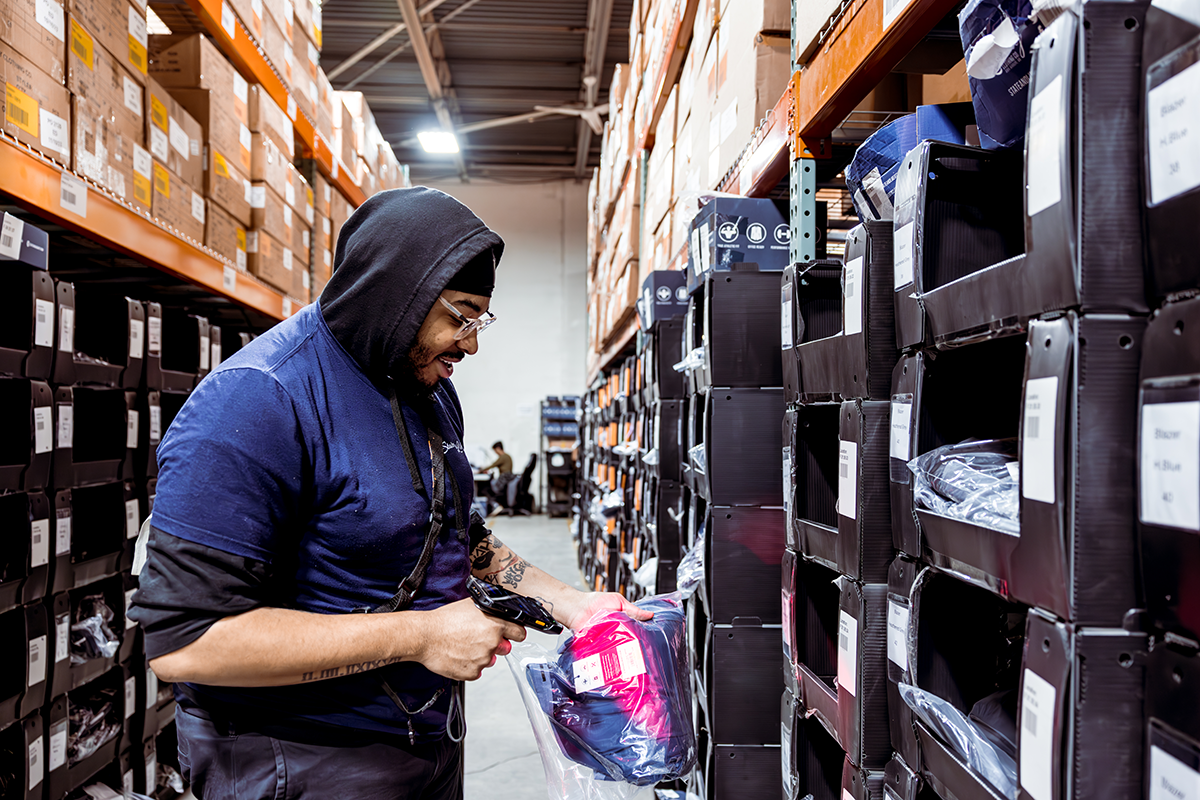
State & Liberty saw tremendous improvements here. After replacing manual processes with Peoplevox, they reduced labor needs by 67% while accelerating picking by 75%. With real-time inventory synced across ecommerce and retail channels, and multi-SKU pick faces optimized, their team now fulfills daily orders with just four people in under two hours.
Tip 4: Process small, daily orders faster with a WMS
In your fashion warehouse, you likely handle many small orders that need to be picked daily. This creates challenges for picking and packing, especially as order volumes increase. Sometimes orders get mis-picked, misplaced or miss the daily pickup time.
With the right warehouse management system in place, you can manage a massive number of SKUs with automated storage and retrieval. Simply scan the barcode on the product and the location where you put it, and nothing gets lost or mis-picked. This allows your warehouse to work more effectively and reduces the manual effort required to move goods around.
These capabilities are particularly important in fashion, where your customers often order just one or two units of a specific product. Efficient systems help you maintain speed and accuracy without overwhelming your team.
Tip: If small, frequent orders are slowing your operation down, it may be time to upgrade your WMS.
AYBL Group is a standout example. As the brand scaled from a living room startup to shipping over 500,000 orders annually, Peoplevox became a crucial enabler of their growth. The WMS allowed AYBL to transition from paper pick slips to barcode scanning and guided workflows, enabling them to scale to 70,000 orders per day during peak while onboarding 70+ seasonal staff with just 2–3 hours of training.
Tip 5: Scale seasonal staffing with easy-to-learn systems
Fashion ecommerce brands often see huge surges in volume during product drops or sales. But if your warehouse relies on tribal knowledge or paper pick slips, scaling during peak periods becomes chaotic and error-prone. The best way to ramp up staff during high-volume periods is by deploying mobile-first systems that are intuitive and quick to train on.
Brands like Lounge Underwear and Aver Active highlight this well. Both scaled to thousands of daily orders with temporary workers onboarded in under an hour. Barcode scanning workflows and pick route automation mean even new hires can hit the ground running with minimal supervision.
Tip: Choose a WMS with intuitive mobile workflows so seasonal staff can contribute productively on day one, not month three.
Build a warehouse that grows with your fashion brand
Fashion ecommerce success isn’t just about great design or marketing. It’s about consistently delivering on customer expectations through operational excellence. The right warehouse setup can become your biggest enabler, allowing you to scale confidently, even during peak seasons.
Whether you’re upgrading from manual processes or optimizing an existing system, take cues from leading brands like AYBL, Amaroso, and Lounge Underwear. Barcode scanning, zone planning, and mobile WMS workflows aren’t just operational upgrades. They’re competitive advantages.
Ready to future-proof your fulfilment? Talk to our team and see how Peoplevox can support your next phase of growth.
Fashion warehousing FAQs
How can you onboard seasonal staff more quickly in a fashion warehouse?
Clear location labelling, simple picking workflows, and system-guided processes help new team members become productive faster. When your warehouse processes are consistent and easy to follow, temporary staff can contribute with less training time.
Should you separate fast-moving and slow-moving fashion inventory?
Yes. Separating fast movers from slower-selling items can reduce congestion in high-traffic areas and make picking more efficient. This approach also helps you allocate space more effectively based on demand.
How do warehouse systems support multichannel fashion operations?
Modern warehouse systems help you manage inventory across multiple sales channels by keeping stock levels accurate and up to date. This reduces the risk of overselling and supports consistent fulfillment, whether orders come from your website or other channels.
What warehouse metrics matter most for fashion ecommerce performance?
Key metrics include pick accuracy, order cycle time, inventory turnover, and return processing time. Monitoring these indicators helps you identify bottlenecks and improve performance over time.
When should you consider upgrading your warehouse technology?
If manual processes are slowing you down, accuracy issues are increasing, or it is becoming harder to scale during peak periods, it may be time to reassess your warehouse systems. The right technology can restore control and support continued growth.