

Key Takeaways
-
Green warehousing is about reducing the environmental impact of your warehouse operations without sacrificing safety or on-time fulfillment.
-
The best green warehouse improvements are often the least glamorous: lighting, HVAC procedures, charging practices, packaging right-sizing, and reducing rework.
-
You can often store more inventory in the same footprint by using your existing space more efficiently with dynamic storage (sometimes called chaotic storage).
-
Going paperless with a warehouse management system (WMS) can reduce waste and cut repeat work, especially when barcode scanning prevents mispicks.
-
Start with measurement. When you track energy, waste, and rework per order, you can prioritize changes that actually move the needle.
Green warehousing is becoming a baseline expectation
If you run ecommerce fulfillment, you’ve probably felt the shift. Customers, retail partners, and even your own team are asking more questions about sustainability. That pressure shows up in different ways depending on your market, but the direction is consistent: you need to understand, explain, and improve the environmental impact of how you store, pick, pack, and ship.
The good news is that green warehousing is not only about optics. Many eco-friendly warehouse changes reduce operating costs, improve safety, and make day-to-day execution more consistent.
Green warehouse meaning: what “green warehousing” actually is
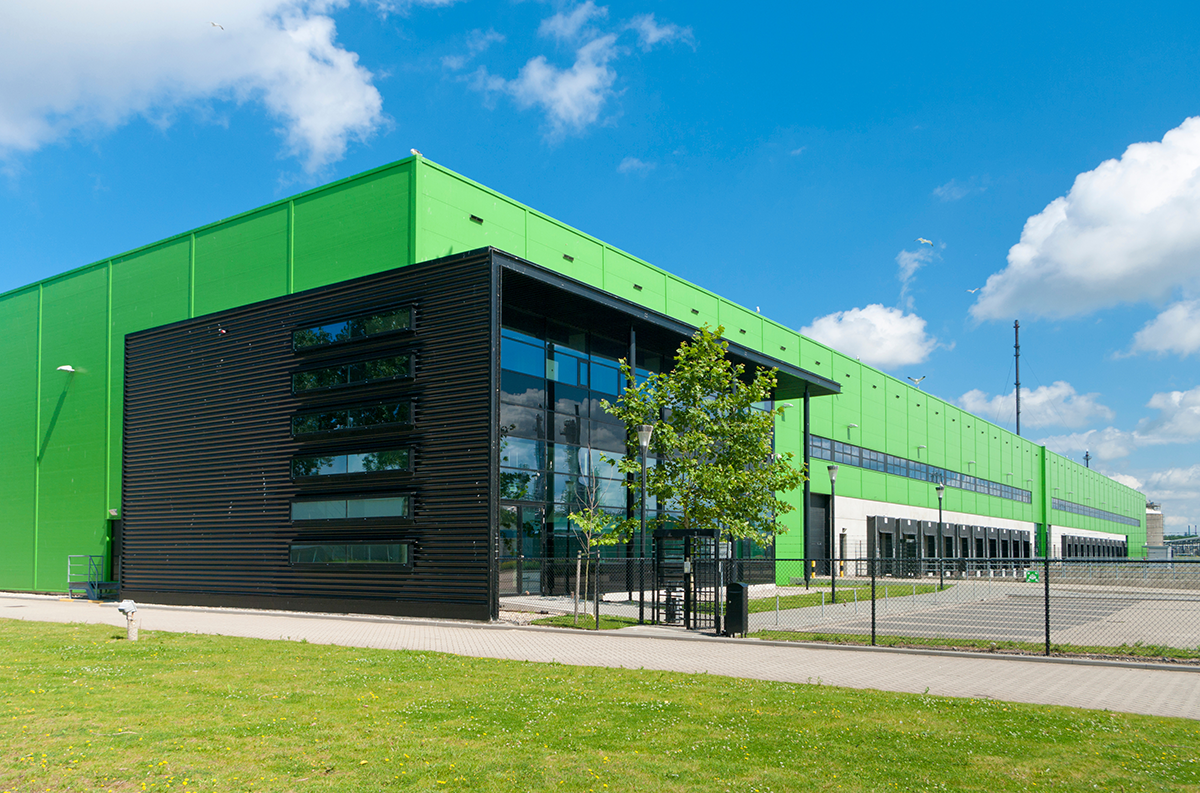
Green warehousing means running a warehouse in a way that reduces environmental impact across energy use, waste, water, and emissions, while still protecting service levels.
In practice, a green warehouse strategy typically focuses on:
-
Using less energy per order shipped
-
Producing less waste per order (especially packaging and consumables)
-
Reducing rework (mispicks, reships, damaged goods, unnecessary returns)
-
Choosing equipment and processes that improve safety and efficiency
If you lead a growing business, it helps to think of green warehousing as an operational discipline, not a one-time project.
How to prioritize green warehouse improvements (without slowing fulfillment)
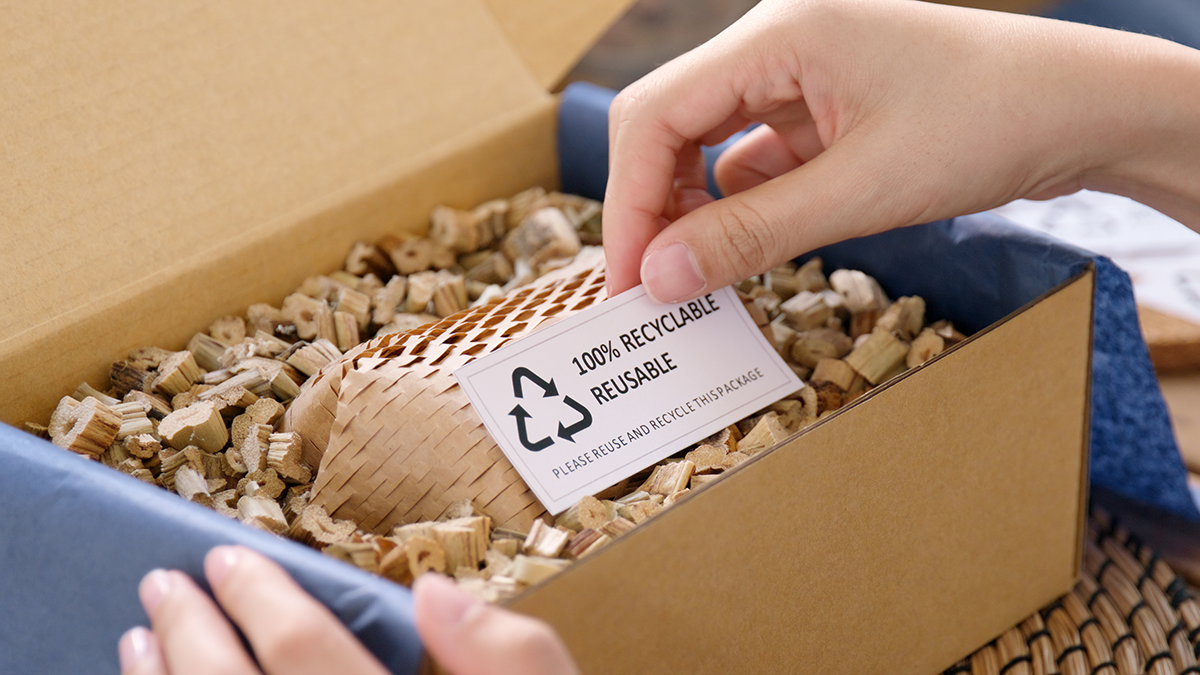
Not every sustainability idea belongs on your roadmap right now. To keep momentum and protect on-time shipping, sort initiatives into three buckets.
1) Quick wins (1 to 4 weeks)
These are low-risk changes you can implement without disrupting workflows.
Examples of quick-win projects:
- Install energy-efficient lighting
- Update standard operating procedures (SOPs)
- Post visual aids to reinforce good habits
- Install smart meters to track energy usage
- Use eco-friendly, right-sized packaging for shipments
- Save water by swapping out fixtures like faucets
2) Operational upgrades (1 to 2 quarters)
These changes usually touch process, training, or how you manage work across shifts.
Examples of operational upgrades:
- Go paperless, replacing paper-based systems with digital tools
- Optimize energy usage according to zone
- Switch to electric forklifts instead of internal combustion models
- Implement a warehouse management system to improve process efficiency
- Use a dynamic storage system to maximize available warehouse space
3) Capital projects (6 to 18 months)
These are bigger investments that can pay off, but require planning (and usually landlord coordination if you lease space).
Examples of capital improvements:
- Upgrade to clean energy sources, like solar panels, windmills, and geothermal heat
- Improve insulation and building envelope
- Install a green roof
- Manufacture your packaging in-house
The sections below provide more detail on the green warehousing examples for each bucket.
Quick win green warehouse improvements you can implement fast
Install energy-efficient fixtures
Lighting
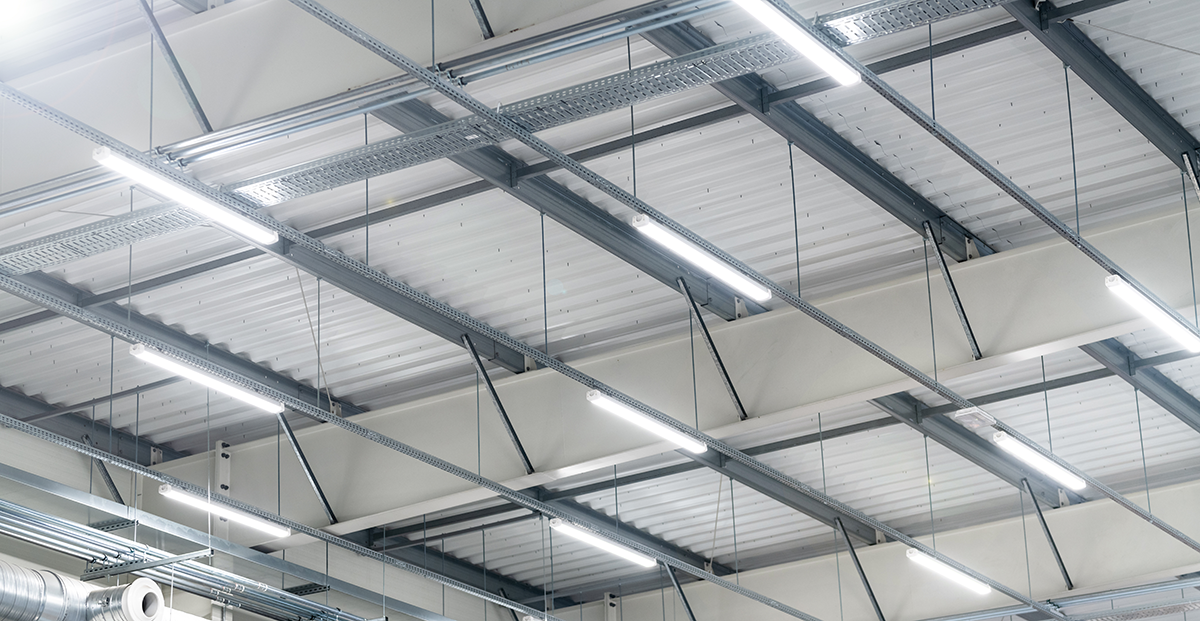
If you’re still using older bulbs or fixtures, moving to LED lighting is usually one of the simplest upgrades. Pair LEDs with motion detectors and light sensors in lower-traffic areas (like long aisles, overflow storage, and some staging zones) so you are not lighting empty space all day.
Plumbing
If you control your facility fit-out, fixtures like dual-flush toilets and sensor faucets can conserve water. If you lease space, some upgrades may still be possible with landlord approval, especially if you can show a clear ROI.
Update SOPs to stop wasting energy
Some energy waste has nothing to do with equipment and everything to do with employee habits:
-
Keep dock doors closed when they’re not actively in use
-
Set clear rules for space heaters and fans
-
Avoid leaving vehicles idling in yards and loading areas
-
Turn off lights and equipment when not in use
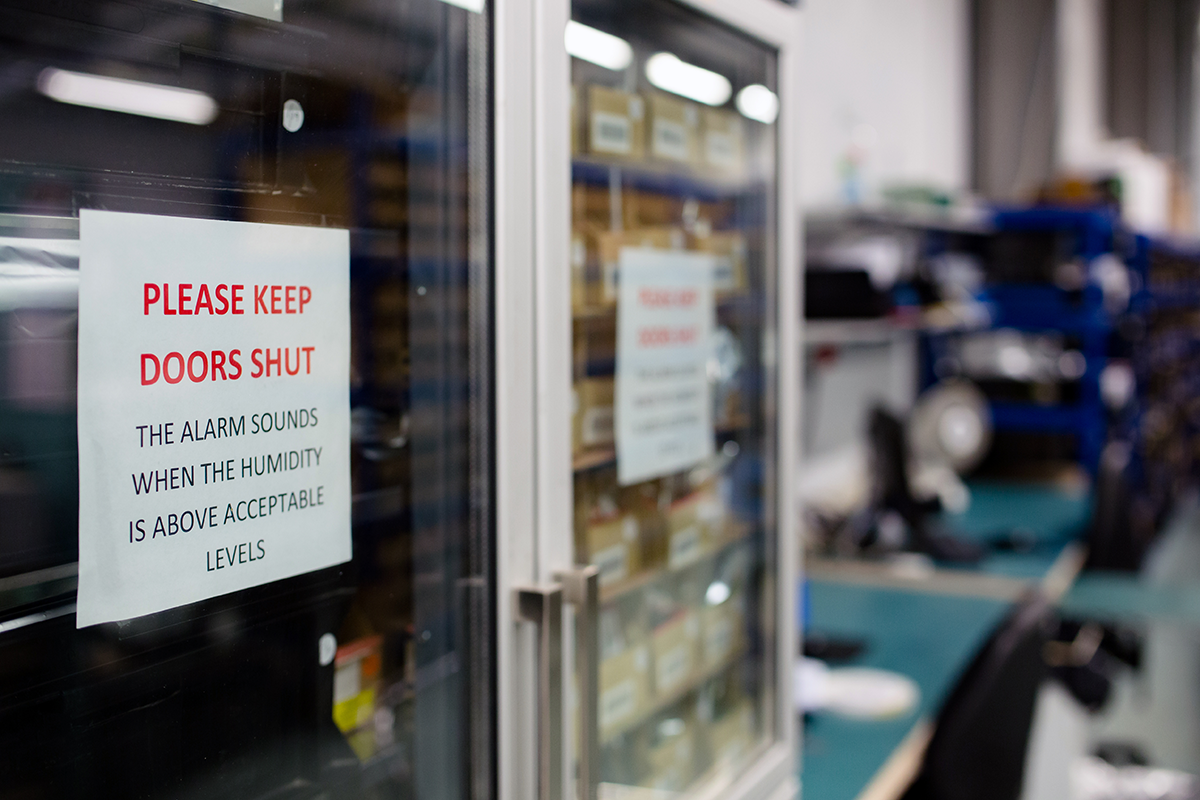
Small SOP updates can compound into meaningful reduction, especially across multiple shifts. Share the measurable impact with employees to help them buy in. Consistent reinforcement and reminders are key.
Install signage and post SOPs in areas where energy waste tends to occur. Visual reminders help employees remember new procedures and reinforce good habits.
Deploy smart meters and track usage patterns
If you can’t see it, you can’t manage it. Smart meters and basic sub-metering can help you understand when and where energy spikes happen.
Even a simple weekly review helps you spot:
-
Equipment left running overnight
-
HVAC settings that fight the season
-
Chargers drawing power outside planned windows
Use recycled and right-sized packing materials
Recycled packaging is a start, but right-sizing is often where you see both cost and waste reduction. If you can reduce void fill and ship smaller parcels, you typically reduce material use and dimensional weight costs at the same time.
Look at how much wasted space is in the box below:
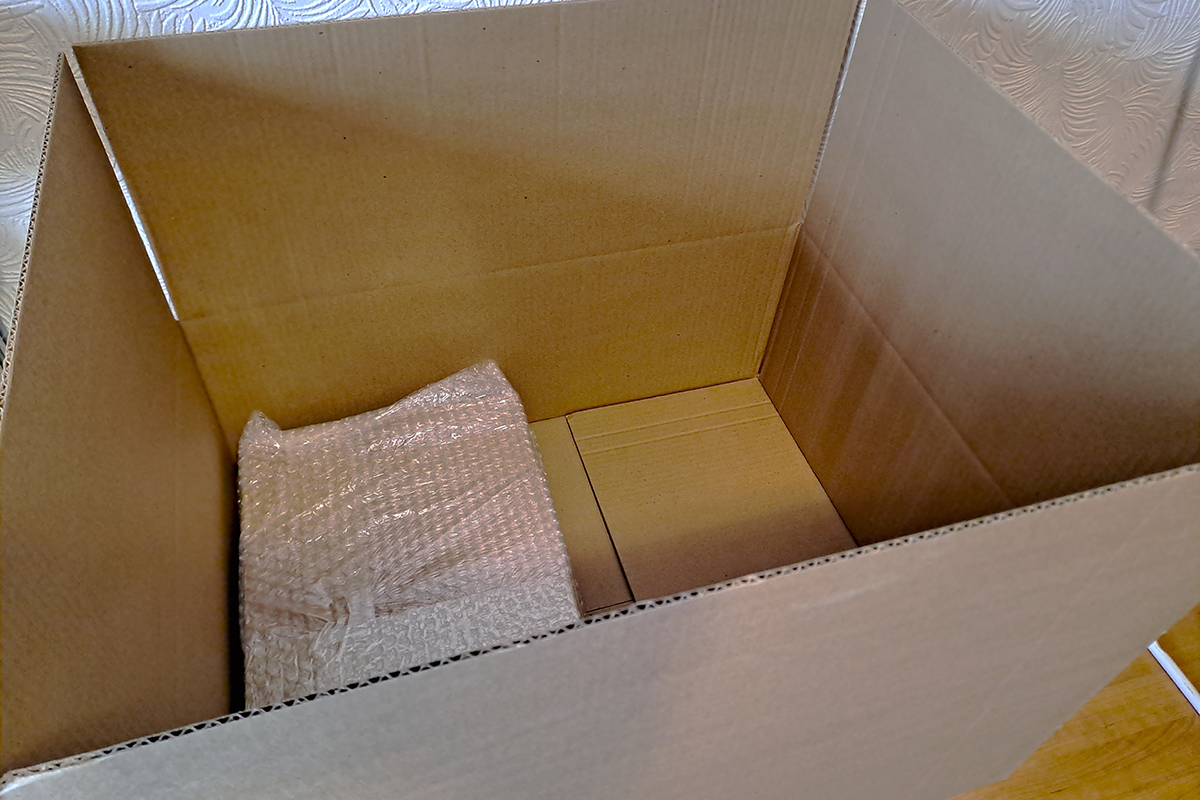
Consider:
-
Standardizing a smaller set of box sizes that fit your order profile
-
Training packers how to avoid overboxing
-
Automating your purchase orders to re-order box sizes just in time
-
Reviewing damage rates after changes (you do not want higher breakage)
Operational upgrades that support a greener warehouse (and better performance)
Go paperless in the warehouse
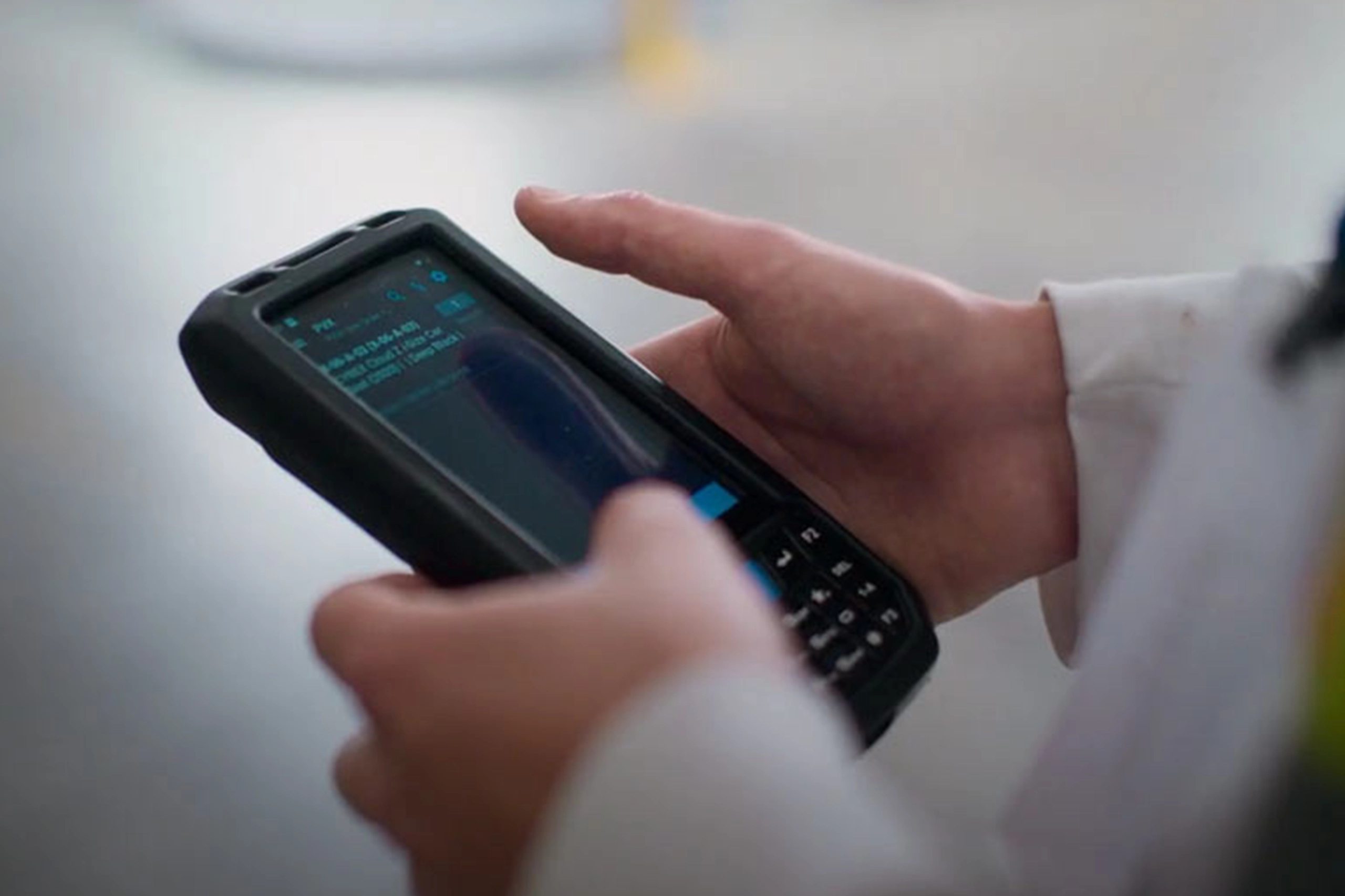
Going paperless is an eco-friendly warehouse move, and it also has a productivity payoff when it eliminates repeat work.
A warehouse management system (WMS) can reduce paper usage by digitizing picking and receiving tasks. More importantly, scan-based workflows can prevent common errors that create waste, like mispicks, reships, and re-packing.
If you want “green” gains that do not slow your operation, target paper-based, manual processes that also create rework.
Optimize your energy use by zone
Energy use in warehouses is not uniform. Not every part of your warehouse needs the same lighting, heating, or ventilation. Zoning your energy usage based on activity level, time of day, and temperature needs helps cut waste and lower costs.
For example, you can dim lights in low-traffic aisles, reduce HVAC output in staging areas, or automate shutoffs in unused zones. Smart sensors and zone-based controls make this easier to manage without adding complexity to daily operations.
Packing stations, charging areas, and climate-controlled zones usually consume more energy than other zones. If you can meter or manage by zone, you can roll out targeted improvements instead of attempting broad, disruptive projects.
Over time, zone optimization can deliver significant energy savings with minimal disruption.
Upgrade to electric forklifts
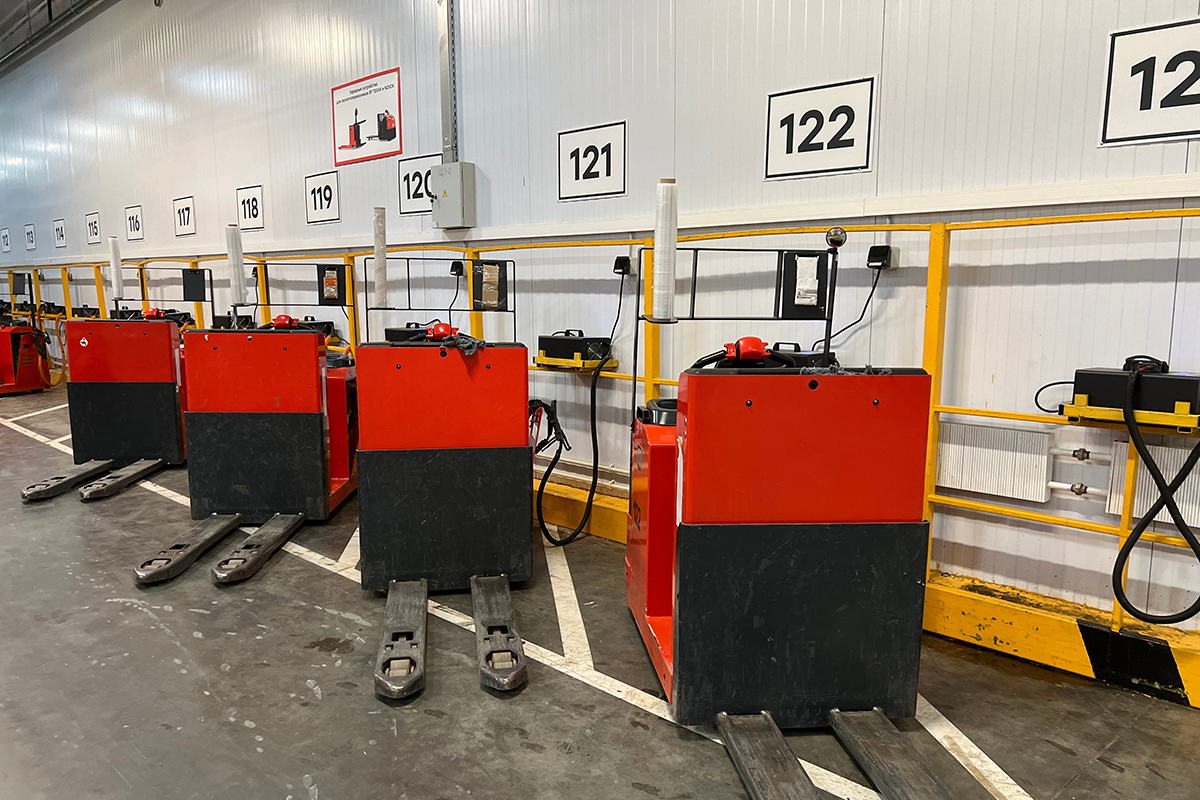
If you run a fleet of internal combustion forklifts, moving to electric can reduce on-site emissions and noise. It may also improve the work environment.
Make sure you plan for:
-
Charging infrastructure and safe charging procedures
-
Battery maintenance responsibilities
-
Shift coverage so equipment availability stays predictable
Implement a WMS to reduce rework
A lot of warehouse waste is hidden inside “normal” operations:
-
Picking errors that create returns and reships
-
Damaged goods that get written off
-
Extra miles walked because inventory is not where the team expects it to be
This is where operational control matters. When inventory is accurate and workflows are consistent, you reduce repeat handling and avoidable shipments.
Use dynamic storage to maximize space
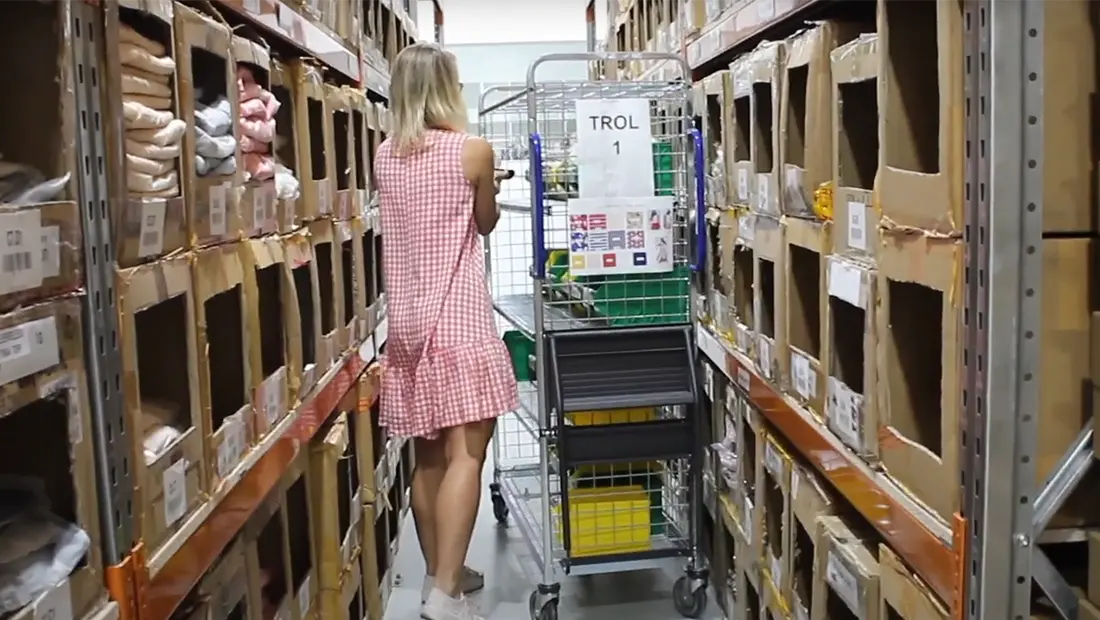
In green warehousing, it’s important to maximize the number of SKUs you can store per warehouse, and dynamic storage is the best way to do it.
Dynamic storage (sometimes called chaotic storage) is a location strategy where inventory is not assigned to one fixed “home” bin forever. Instead, your WMS directs putaway to any suitable open location, and your team scans the item and the location so the system always knows exactly where it is.
This matters for green warehousing because fixed slotting often creates unusable gaps. Inventory levels change, but the empty space stays empty.
With dynamic storage, you can fill open space as it appears and reduce the chance that you “run out of space” even when the building is not truly at capacity.
Capital projects for green warehousing (when you’re ready)
Use renewable energy
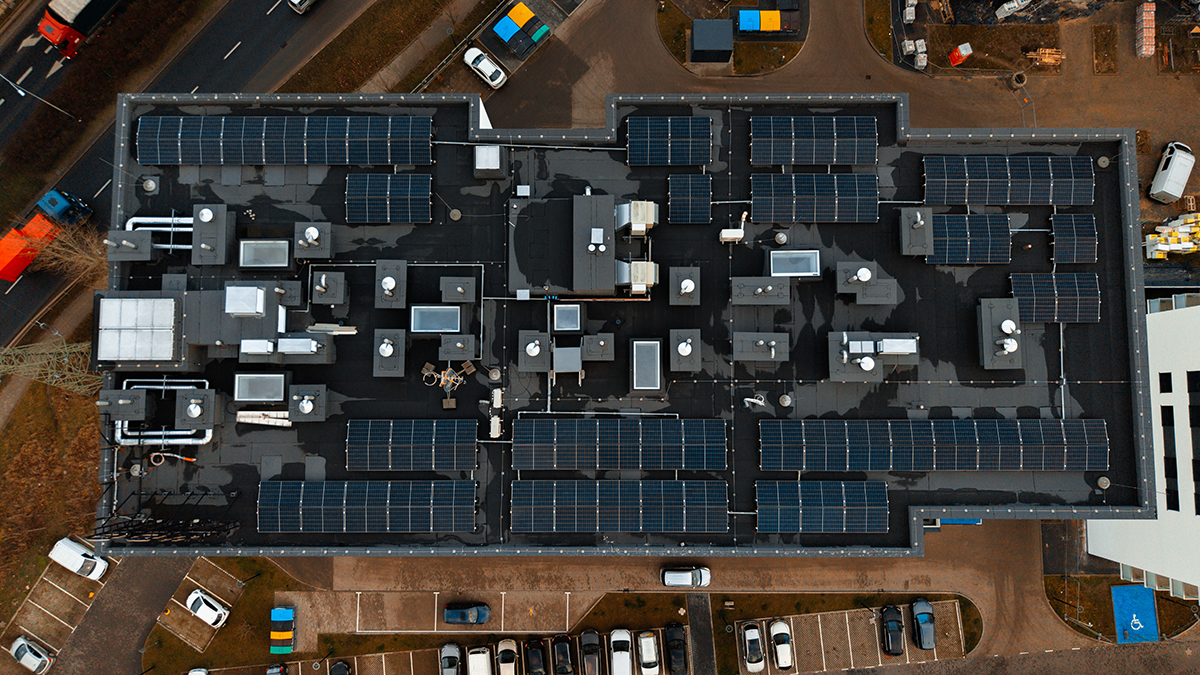
If you own your building or have landlord buy-in, solar panels can turn unused roof space into a long-term energy lever. Depending on your location, renewable installations may also qualify for incentives or favorable programs.
If you cannot install on-site, you may still be able to explore renewable energy purchasing options through your utility or supplier. Availability varies by region.
Improve insulation and building envelope
Energy efficiency starts with how well your warehouse retains temperature. Improving insulation and sealing up the building envelope reduces the need for constant heating or cooling—especially important for large, high-ceilinged spaces that struggle with temperature control.
Here’s where to focus:
-
Roof and ceiling insulation: Heat rises. Upgrading roof insulation with high-R-value materials can significantly cut HVAC demand. In some cases, adding a cool roof coating can also reflect solar radiation and reduce internal temperatures.
-
Wall insulation retrofits: For older buildings, exterior or cavity wall insulation can improve thermal performance without disrupting internal operations.
-
Sealing air leaks: Gaps around loading docks, windows, and doors can drain energy. Use high-performance weather stripping, dock seals, and insulated doors to keep conditioned air inside.
-
Energy-efficient windows and skylights: Switch to double- or triple-glazed units with low-E coatings. Consider automated skylights with sensors for natural light and passive ventilation.
-
Insulated dock doors and air curtains: These are especially valuable in high-traffic areas to maintain internal temperature control while loading and unloading.
By tightening your warehouse’s thermal envelope, you lower operational costs and reduce emissions without major workflow disruption. It’s one of the most cost-effective ways to support green warehousing goals, especially in regions with extreme seasonal temperatures.
Install a green roof
A green roof is a layer of vegetation installed over a waterproof membrane on top of a building. In warehousing, green roofs help reduce heat absorption, improve insulation, and slow stormwater runoff. This leads to lower energy usage and environmental impact.

There are several types of green roofs, ranging from lightweight systems planted with low-maintenance sedums, to deeper, more intensive setups that can support shrubs or even trees. For large distribution centers, extensive green roofs are often the most practical—they require minimal structural upgrades and deliver long-term sustainability gains with relatively low maintenance.
Green roofs also extend roof lifespan, support urban biodiversity, and can complement other warehouse sustainability projects like solar panel installation. They’re a visible, high-impact way to reinforce your brand’s environmental commitment while improving building performance.
Manufacture eco-friendly boxes in-house
Remember the quick win of recyclable, right-fit packaging? For warehouses shipping a wide range of product sizes, in-house box-making can be a game changer. Instead of relying on standard-sized packaging and shipping air, you can produce right-sized boxes on demand. This cuts down on waste and shipping costs.
Box-on-demand systems create custom cardboard boxes from flat corrugated sheets, using dimensions pulled directly from your order data. That means every box is tailored to the product it holds, reducing the need for plastic void fill and minimizing dimensional weight charges.
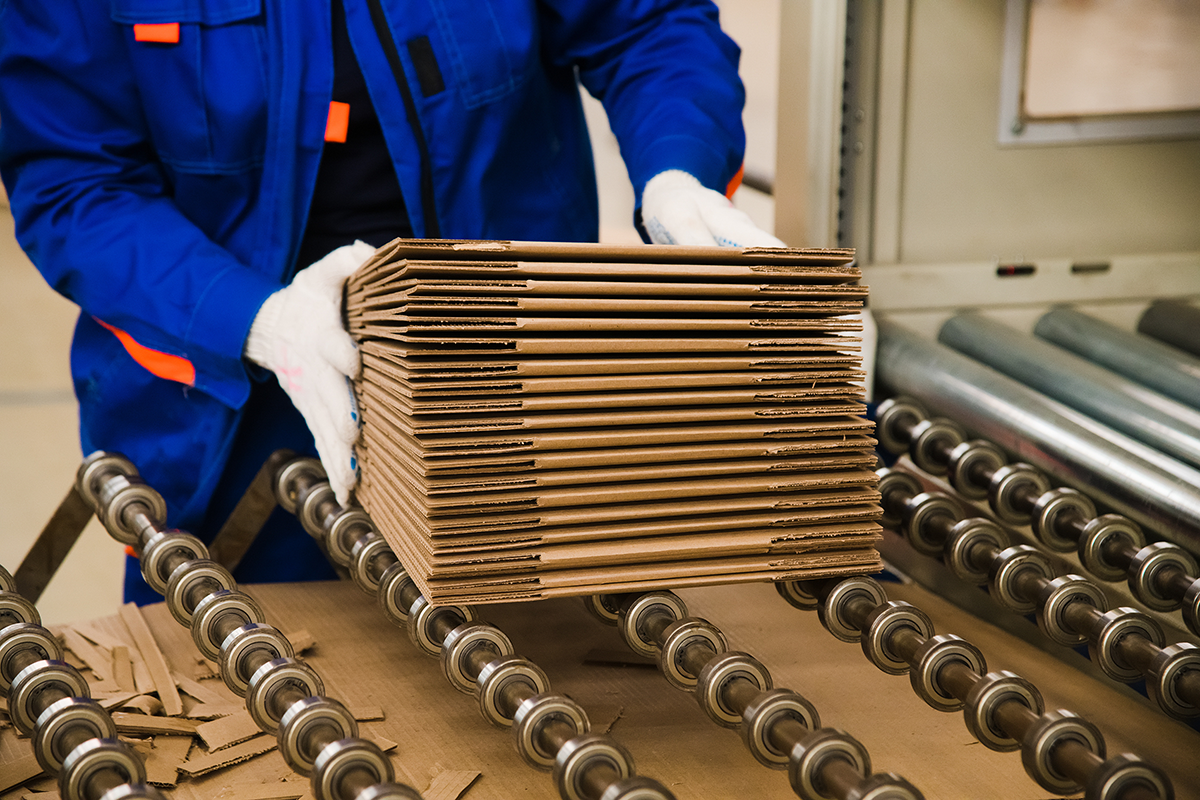
In-house production also streamlines packing. Your team no longer needs to hunt for the best-fit box or manually trim down oversized ones. And with fewer pre-cut sizes to stock, your packaging inventory becomes leaner and easier to manage.
For green warehousing teams, this is a high-impact step: smaller boxes mean fewer trucks on the road, lower emissions per order, and a better unboxing experience for your customer.
Start a closed-loop recycling program
By launching a structured recycling program, your operation can turn waste into a sustainable resource, either for reuse on-site or resale into local material streams.
Start by identifying high-volume post-consumer materials in your outbound and inbound workflows.
Common recyclable items include:
-
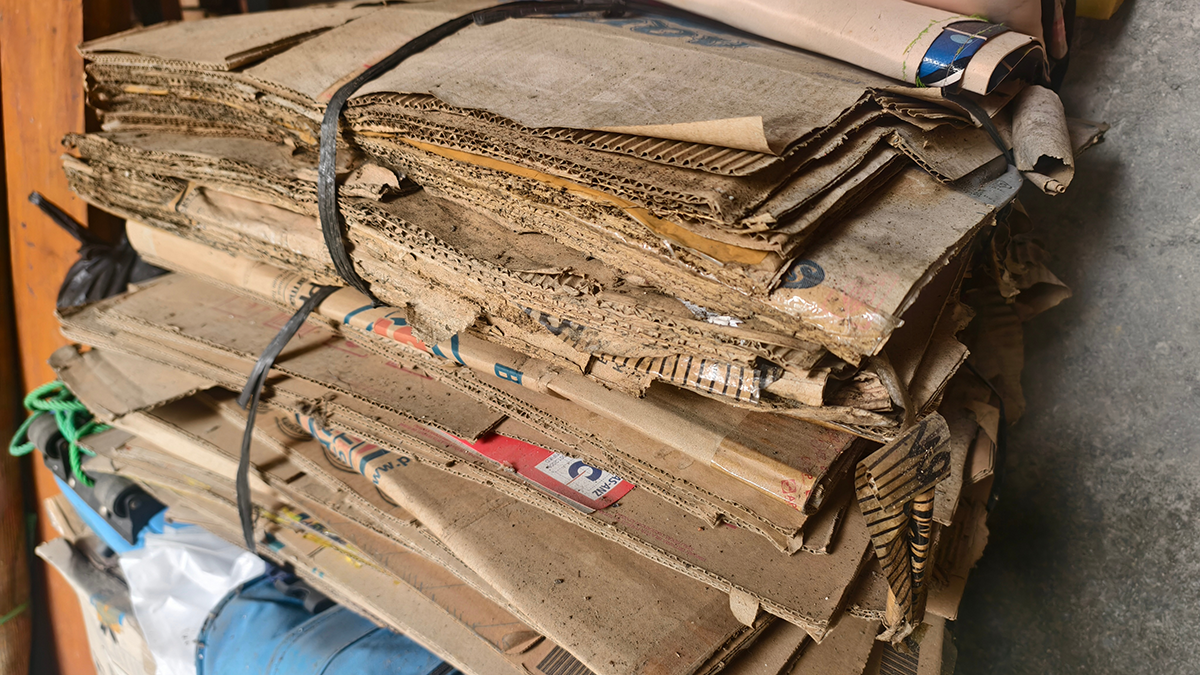
Corrugated cardboard from supplier deliveries
-
Plastic stretch wrap and pallet film
-
Worn pallets or dunnage
-
Returned packaging materials
A sustainable supply chain
From there, set up dedicated collection, baling, or compaction stations to process these materials. Partner with local recyclers or manufacturers who buy clean, sorted materials—or, if you have the capability, repurpose them yourself. For example:
-
Baled cardboard can be sold or sent to packaging partners who offer closed-loop box sourcing
-
Shredded paper can be reused as protective void fill
-
Clean stretch wrap can be recycled into new film or liners
Some warehouses even recover used goods (e.g., empty aluminum containers, hangers, or consumer packaging from returns) and work with local partners to process them into new raw materials.
The key is structure. Recycling bins alone won’t deliver impact, but a program with clear sorting rules, staff training, and tracked material flow can reduce waste, cut disposal costs, and contribute to circular economy goals.
Offset your carbon footprint
Even the most efficient warehouse generates emissions. Carbon offsetting lets you balance that impact by funding projects that remove or reduce carbon elsewhere.
Popular options include investing in reforestation, renewable energy, or verified carbon credits. Offsetting isn’t a substitute for reducing emissions, but it’s a meaningful way to neutralize what you can’t yet eliminate.
A simple green warehousing checklist for the next 30 days
If you want a practical starting point, this is a solid “month one” plan:
-
Walk the warehouse and label the top five energy waste sources (such as lighting, dock doors, chargers, HVAC, idle equipment)
-
Switch high-impact areas to LED lights (or confirm timeline if already planned)
-
Add motion sensors for lights in low-traffic zones
-
Standardize “doors closed” and “no idling” policies and post signage
-
Audit packaging: box sizes, void fill, damage rate, and overboxing patterns
-
Identify your top 3 rework drivers (mispicks, exceptions, damages) and assign an owner to reduce them
-
Start tracking one baseline metric: kWh per 100 orders shipped (even if it’s rough at first)
-
Research options for a WMS to help your warehouse go paperless and move to dynamic storage
How a WMS supports greener warehouse operations
If you’re trying to make sustainable changes without slowing fulfillment, focus on the improvements that also reduce rework.
A WMS can support green warehousing by:
-
Virtually eliminating paper-based processes (picking, receiving, putaway, returns)
-
Preventing mispicks through barcode validation, which helps reduce reships and repeat handling
-
Improving fulfillment speed so you avoid emergency shipments and last-minute workarounds
-
Supporting dynamic storage so you can use warehouse space more efficiently
-
Helping you spot bottlenecks and repeat issues that create waste
If you’re evaluating how to reduce paper processes and rework in the warehouse, the Descartes Peoplevox WMS is designed for fast-growing D2C brands that need accuracy and scalable fulfillment processes without adding complexity.
If you’re building your green warehouse plan and want to see how Peoplevox can help, reach out anytime for a free, no-obligation consultation.
Green warehousing FAQs
How do you measure whether green warehousing is working?
Start with per-order metrics so growth does not hide the real trend. Common options include:
-
kWh per order shipped (or per 100 orders)
-
Pounds of packaging used per order
-
Waste or recycling volume per week (normalized by orders shipped)
-
Returns and reships rate tied to warehouse error reasons
Pick one metric you can measure consistently, baseline it for 30 days, then improve it quarter over quarter.
What are the most common mistakes companies make when trying to build a green warehouse?
Two issues show up often:
-
Treating sustainability like a side project with no owner, no timeline, and no accountability for results
-
Choosing initiatives that sound good but create fulfillment friction, which usually gets them abandoned during peak
Green warehousing sticks when it is tied to operational reliability, cost control, and safety.
How do you build an ROI case for green warehouse improvements?
Frame the business case around cost and risk, not only sustainability:
-
Energy reduction (monthly bills)
-
Lower spend on consumables (packaging, paper, printer supplies)
-
Reduced rework (labor time, reshipment cost, customer service time)
-
Fewer damages and write-offs
When you connect an initiative to both cost and service, it is easier to prioritize and fund.
Can green warehousing help with hiring and retention?
It can, especially when changes improve the day-to-day work environment. Examples include better lighting, quieter equipment, safer charging areas, and cleaner processes that reduce last-minute chaos.
Retention impact is strongest when you involve supervisors early and make improvements visible to the team.
What if you lease your warehouse and cannot make building upgrades?
Focus on changes you can control:
-
Lighting retrofits that do not require major electrical work (with landlord approval)
-
Motion sensors in low-traffic zones
-
Packaging right-sizing and recycled materials
-
Paperless workflows and process improvements
-
Better charging practices and equipment maintenance
You can make meaningful progress without owning the building.
How do you communicate green warehousing progress without sounding like you’re greenwashing?
Consider publishing a yearly or bi-annual environmental impact report. Stick to specifics:
-
Share what you changed (LED retrofit, reduced paper pick lists, packaging right-sizing)
-
Share how you measured impact (kWh per order, packaging weight per order)
-
Share the timeframe (baseline month vs current quarter)
-
Avoid vague claims like “carbon neutral” unless you can back them up with documentation
Clarity, transparency, and accountability build trust.