
Key Takeaways
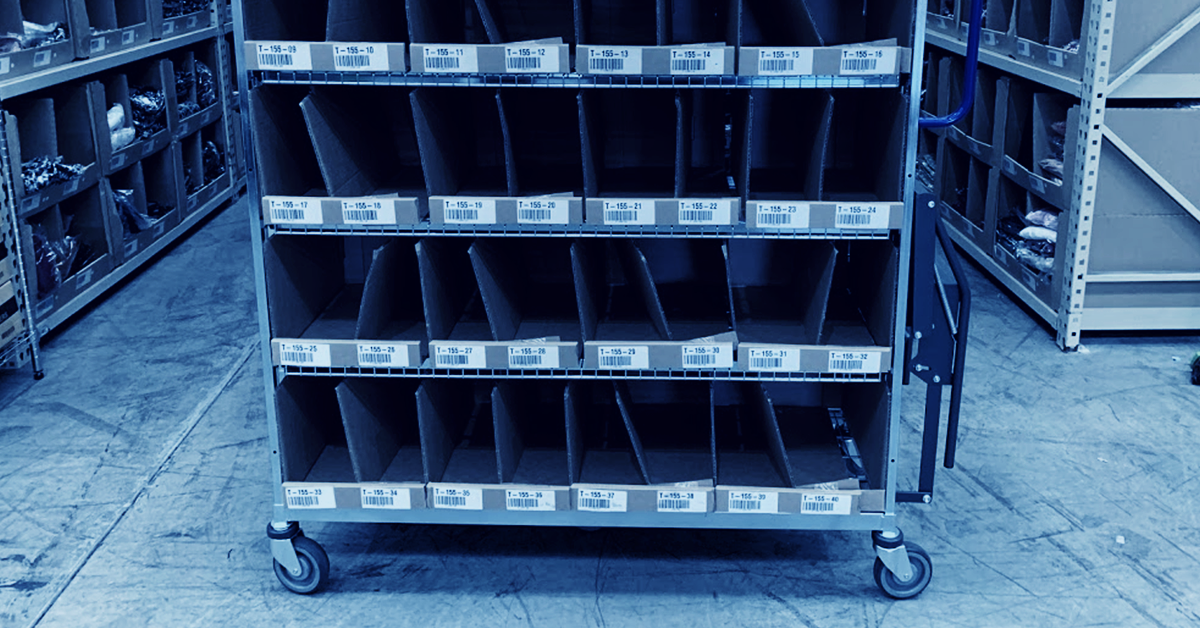
- Pick trolleys like the Waddy Trolley are built for ecommerce warehouses handling high-volume picking and sorting.
- Adjustable shelving turns each tote slot into a temporary order location, sized for bulky or very small items.
- A lightweight side ladder lets pickers reach extra levels of racking, unlocking more pick locations, better use of vertical space and less time spent on replenishment.
A well-designed picking trolley supports every part of your warehouse workflow. When order volumes rise or shifts get busy, the right equipment helps pickers stay organized and work with confidence. If you want to reduce walking time, improve accuracy, or help new staff become productive faster, selecting the right trolley is an easy way to lift performance.
The guidance below will help you choose a trolley that removes friction from your process and supports on-time fulfillment with the accuracy your customers expect.
Why a Purpose-Built Trolley Matters in Ecommerce
Sure, trolleys are nice, but are they really that important? Well, speed and consistency drive ecommerce fulfillment. Every extra step or extra second on a pick run costs your business money, especially for high-volume brands. A purpose-built trolley keeps orders organized, mobile, and easy to access so pickers can keep moving on the guided route ahead.
What Makes a High-Performing Picking Trolley
A good trolley should feel comfortable and intuitive from the moment someone starts using it. Here are some trolley features that help workers pick quickly and reliably.
1. A clear, predictable tote layout
Consistent spacing and visible labels help pickers stay organized without stopping to think. A clear structure makes batch or cluster picking easier to manage and reduces hesitation during busy shifts.
2. A lightweight frame that holds up to daily use
If a trolley feels heavy before it is loaded, it slows the entire route. Lightweight materials reduce strain and help pickers maintain a steady pace throughout the day.
3. High-quality wheels for smooth movement
Stable, easy-rolling wheels support quick turns and controlled movement. Pickers can move through narrow aisles more comfortably and with less effort.
4. A configuration that fits your warehouse layout
Your warehouse aisles, SKU profiles, and typical order sizes all influence the best trolley design. When the configuration matches your space and workflow, productivity improves immediately.
A Practical Example: The Waddy Trolley
We’ve visited over 1000 warehouses in 52 countries and see a lot of very good (and very bad) equipment, workflows, and processes. In our experience, the Waddy trolley is best-in-class for high-volume ecommerce picking.
We met the inventor of this trolley design, Paul Waddy, at Showpo. His trolley is equipped for the specific demands of high-volume ecommerce fulfillment in the warehouse.
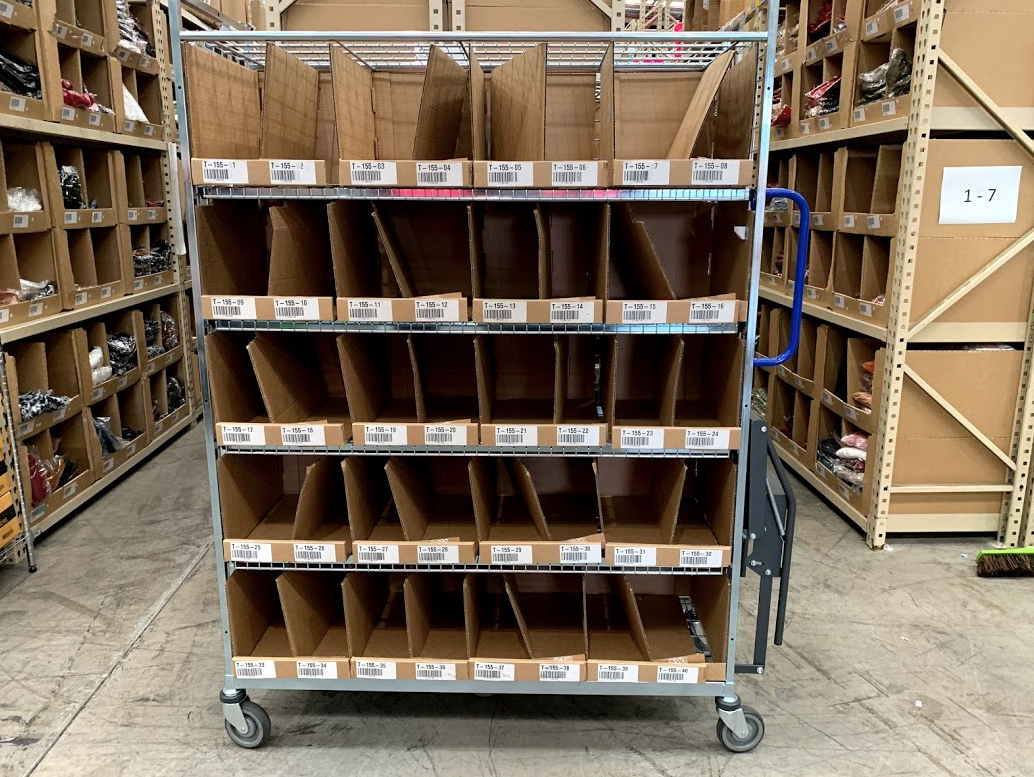
It uses a structured, predictable layout that supports single-item batch picking, keeping totes stable and easy to identify. The compact size fits comfortably in tight aisles, and the light frame helps pickers move quickly. The thoughtful, consistent design reduces errors and keeps the workflow smooth during high-volume periods and day-to-day performance.
What makes these trolleys so special?
Flexible shelving – Each slot or tote on a shelf is a location where picked items are placed for transport to the packing station. It holds all of the items of one particular order as the trolley and driver make their way along the pick route.
The tote sizes and configuration are adjustable. You can set up smaller or larger slots, depending on the size of your items. For example, in the winter, if you are picking bulkier items like coats, you would arrange the slots to be larger.
However, on the same trolley, if you were picking small boxes of jewelry, each slot location could be very small. Small slots allow staff to pick hundreds of orders in one run with the trolley, sorting as they go.
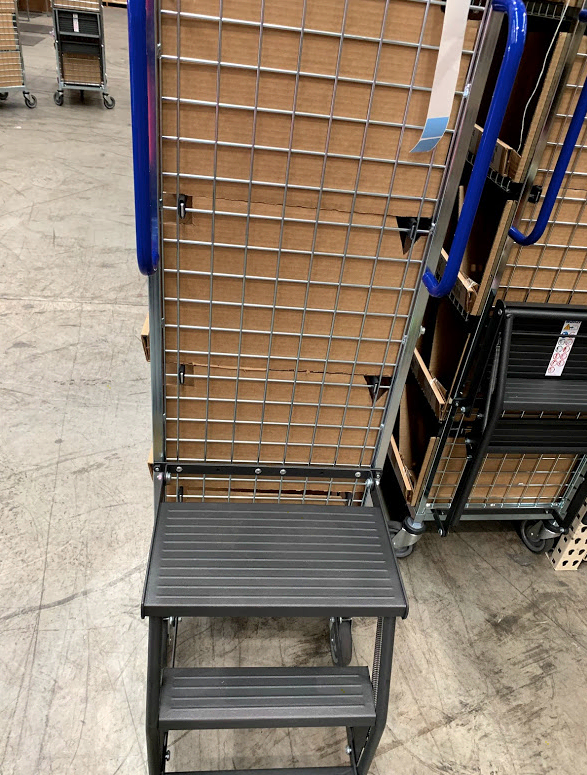
The step ladder – The Waddy trolley has a small, lightweight ladder attached to the side. This is genius because each picker, as they make their way around their pick routes, can reach higher items without needing to drag a ladder around.
Because pickers can reach higher, you can add an extra level of racking along every aisle of the warehouse. This massively increases the number of pick locations with immediate access, so workers can spend less time replenishing pick faces or moving ladders.
Moreover, the ladder and higher racking mean you can maximise not only the 2D floorspace of your existing warehouse, but also the 3D volume by thinking vertically. Many warehouse managers think they’ve run out of space, but there is actually more if you look up.
Other ways to configure this trolley:
- Use a curved hanging rail for hanging items like dresses or suits, so they are not crumpled or folded between pick location and pack bench
- Make a dedicated space for delicate items so they are not crushed in transport
- Consider transparent totes to provide visibility when they are full, empty, etc.
Tips from the inventor
And here is Paul Waddy, inventor of the Waddy Trolley, sharing his top tips for exceptional ecommerce fulfillment and brand building:
Where to buy a warehouse trolley
As much as we wish the Waddy Trolley were available for purchase, it’s a custom build at Showpo and not for sale. The good news is that you can buy a comparable trolley in the UK from Norseman Direct Ltd.
This brand has been recommended by several of our UK customers. They offer bespoke order picking trolleys that can be designed to your specifications.
Not based in the UK? It’s best to source trolleys locally. Because order picking trolleys are large and heavy, international shipping costs can be outrageous.
How trolleys work with a WMS
A structured trolley becomes even more effective when paired with a mobile warehouse management system like Peoplevox. Pickers can follow guided routes on the mobile app, scan items directly into the correct tote on the trolley, and receive real-time prompts that remove hesitation.
This combination reduces walking time, protects accuracy during busy shifts, and makes it easier for new staff to learn the workflow. The trolley provides the physical structure, and Peoplevox provides the digital clarity, which together create a picking process that feels faster and more controlled.
Ready to see how Peoplevox supports high-performance picking? Request a demo
FAQs
How do I know when it’s time to upgrade from basic picking carts to advanced trolleys?
Most teams outgrow basic carts when walking time increases, orders become more complex, or pickers start making more mistakes. If you’re reorganizing routes often or struggling during peak season, a structured multi-tote trolley may help you scale efficiently.
What features make a trolley easier for new warehouse staff to learn quickly?
Consistent tote positions, simple labelling, and ergonomic handles help new staff learn faster. Straightforward layouts reduce hesitation, especially for workers unfamiliar with the warehouse, and support faster onboarding during seasonal surges.
How does trolley design impact picker fatigue during long shifts?
Small design choices, such as wheel quality, handle height, weight distribution, and turning radius, make a big difference. When a trolley rolls smoothly and doesn’t require extra force to manoeuvre, pickers stay efficient and experience less strain over long shifts.
Are certain trolleys better for multi-warehouse operations or 3PL environments?
Yes. Operations with multiple clients or product lines often prefer modular trolleys that can be reconfigured quickly. This makes it easy to switch between customers, adjust tote layouts, or support fast-moving SKUs without replacing equipment.
How do I calculate the ROI of upgrading my warehouse trolleys?
Look at time saved per pick, reduced walking distance, fewer errors, and faster onboarding. Even small efficiency gains add up across hundreds of daily picks, often generating ROI faster than expected, especially for fast-growth ecommerce brands.