
Many ecommerce businesses wonder if they’re too small for a warehouse management system (WMS). But waiting too long can lead to chaos—missed orders, inaccurate stock, and inefficient workflows.
In this article, we explore when to implement a WMS, what factors to consider before doing so, how long the process takes, and how businesses like Aver Active used Descartes Peoplevox to scale efficiently and confidently.
Table of Contents
Signs It’s Time to Implement a WMS
Many growing ecommerce sellers reach a tipping point where manual warehouse processes begin to break down. Here are the most common indicators:
- Frequent order errors or dispatch delays resulting in unhappy customers.
- Difficulty maintaining inventory accuracy.
- Rising order volume without staff scalability.
- Limited visibility into real-time stock or locations.
- Chaos during peak season.
A WMS isn’t just for large operations—brands that adopt one earlier often gain a competitive advantage and ensure the survival of their business.
“If we were still making as many mistakes as we were a year and a half ago now, I probably would have lost hundreds if not thousands more customers.”
— Alice Taya, Aver Active
How Long Does It Take to Implement a WMS?
Implementation time varies depending on warehouse size, complexity, and data readiness. Many Descartes Peoplevox customers go live quickly thanks to structured onboarding and hands-on support. The implementation process usually includes four stages:
- Preparation and data audit–Review existing warehouse data and identify gaps.
- System configuration–Tailor workflows and warehouse layouts to match your operation.
- Testing and training–Ensure staff are confident and the system aligns with your processes.
- Go-live and optimisation–Transition to real-time operations with ongoing support.
Descartes Peoplevox is known for fast, collaborative implementations that minimise disruption and deliver results quickly.
Key Considerations Before Implementing
Before moving ahead with your WMS implementation, it’s important to assess whether your business and team are ready for the transition.
Start by thinking about scalability. A good WMS should grow with your business, supporting increased order volumes, new product lines, and additional warehouse locations without slowing your team down.
Integration is another crucial factor. The system should connect seamlessly with your existing tools—such as your ecommerce platforms, point-of-sale (POS) systems, enterprise resource planning (ERP) software, order management, and shipping solutions. When data flows freely between systems, teams spend less time on manual updates and more time fulfilling orders accurately.
You’ll also need to plan for change management. A WMS introduces new processes and workflows, so ensuring your staff are trained and confident before go-live is essential. When your warehouse team understands why the change is happening and how it benefits them, adoption happens naturally.
Finally, weigh the return on investment (ROI) and level of the support available. A well-implemented WMS should quickly deliver measurable operational gains—such as faster fulfilment and fewer errors—while ongoing support from experienced implementation specialists ensures your system continues to perform as your business evolves.
A successful WMS project isn’t just about the software—it’s about the partnership. Descartes works closely with every client to align warehouse technology with long-term growth goals.
Success Story: Aver Active Thought They Were Too Small for a WMS
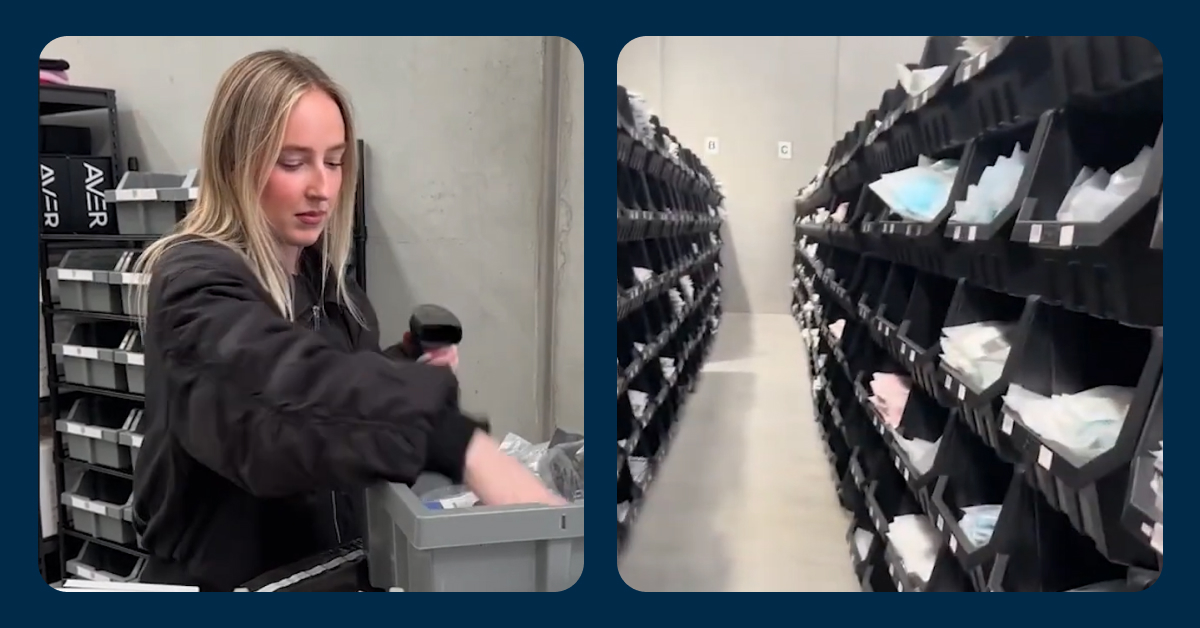
Aver Active is a fast-growing activewear brand offering high-performance clothing for fitness enthusiasts. As demand increased, their warehouse struggled to keep up. Orders were delayed, inventory was often inaccurate, and peak season became increasingly stressful.
Initially, the team thought they were too small for a WMS. But as order volumes grew, inefficiencies began to hurt performance.
After implementing Descartes Peoplevox, the transformation was immediate. Order accuracy improved dramatically, giving the team confidence that every item picked and packed was correct.
Aver Active gained full visibility over inventory and stock locations, allowing them to track products in real time and eliminate misplaced items. Most importantly, they were able to scale fulfilment operations without hiring additional warehouse staff, creating a more efficient and sustainable business model as demand continued to grow.
By taking the leap early, Aver Active positioned itself for sustainable growth and avoided the chaos that often hits fast-scaling brands.
“I think the best time to implement one is when you’re small. Don’t wait till, ‘oh, I want to wait till I’m making $5 million a year’. The best time to do it is when you’re small and you have less amount of stock and grow with the software than to be making $5-$10 million a year. If you’re doing that, you generally are dealing with a lot of stock and then to implement a software at that point […] it’s probably going to take a lot more stress, time, effort, emotions.”
— Alice Taya, Aver Active
Read Aver Active’s full customer success story here.
Why Descartes Peoplevox Is the Right Choice
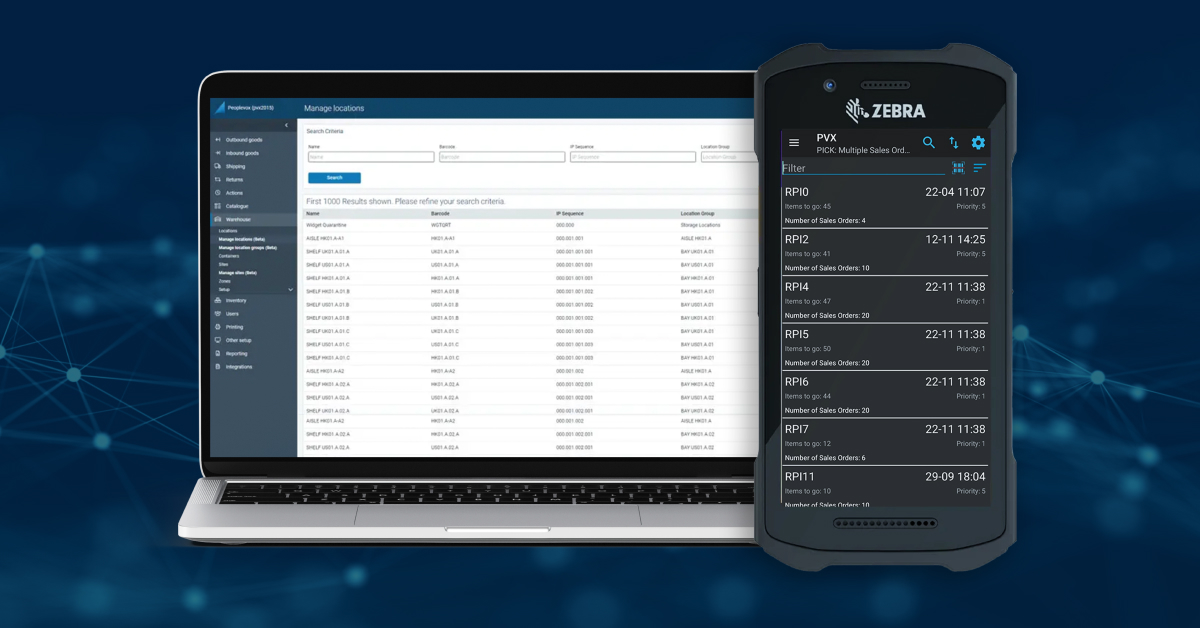
When it comes to implementing a WMS, choosing the right partner makes all the difference. Descartes Peoplevox stands out because it’s:
- Fast to implement—Go live in as little as 40 days.
- Built for ecommerce—Designed specifically for direct-to-consumer (D2C) and wholesale brands.
- Scalable—Handles growth without increasing warehouse staff.
- Connected—Integrates seamlessly across the Descartes Ecommerce suite.
- Proven—Trusted by hundreds of high-growth ecommerce brands around the world.
Key Takeaways
- Don’t wait until warehouse chaos hits—implement a WMS before growth outpaces control.
- Implementation is faster and simpler than most sellers expect.
- Descartes Peoplevox enables ecommerce businesses to grow efficiently with complete visibility and accuracy.
Request a Descartes Peoplevox demo today to discover how implementing our solution can solve your warehousing challenges.