AI Driven Forecasting and Demand Planning
Inventory Forecasting Software for Ecommerce Brands
Ensure you have exactly what you need when you need it. Gain complete control over your supply chain. Forecast demand using AI-powered, real-time forecasting and automated purchase order management.
Descartes ForecastMine™ helps ecommerce fashion, retail, and apparel brands prevent costly stockouts, reduce excess inventory, and protect margins as they scale.
What Is Inventory Forecasting Software?
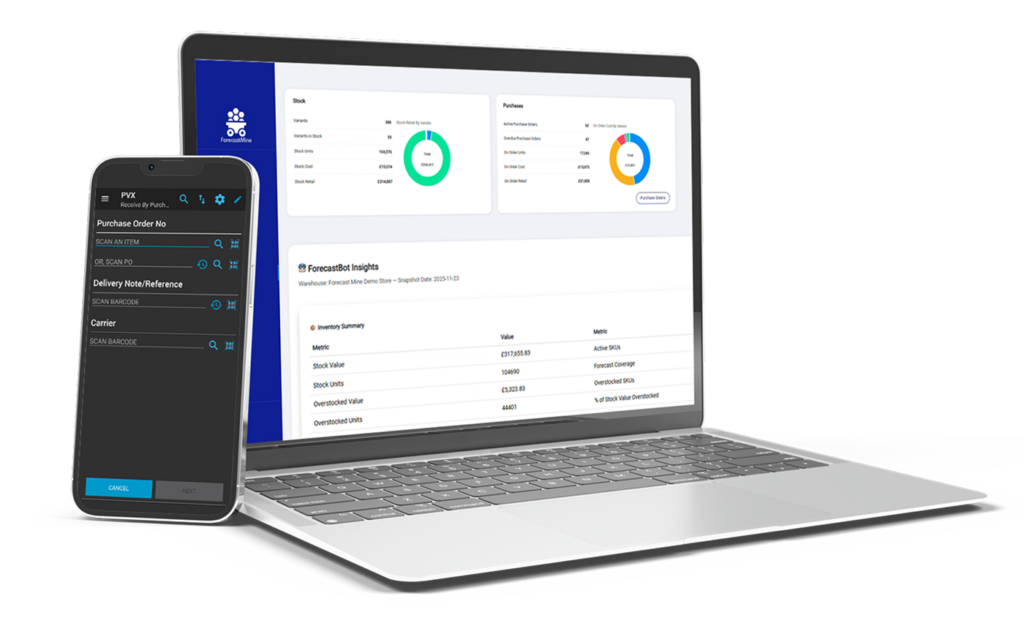
Inventory forecasting software predicts future product demand using sales history, trends, and seasonality data. Often called stock forecast software, these tools help businesses plan inventory, automate purchasing, and maintain optimal stock levels.
Descartes ForecastMine™ turns real-time sales data into precise SKU-level forecasts so teams can make smarter buying decisions and avoid stockouts or excess inventory.
Struggling to Predict What Inventory to Buy?
As ecommerce brands grow, forecasting demand becomes more complex. Expanding product catalogs, promotions, and seasonal trends make demand harder to predict. Without accurate forecasting, teams often discover problems too late, when popular products are already sold out or warehouses are filled with slow-moving inventory.
This often leads to:
- Overstock tying up valuable cash
- Stockouts that cause missed sales
- Slow purchasing cycles
- Limited visibility into future demand
AI Inventory Management Software for Ecommerce Forecasting and Planning
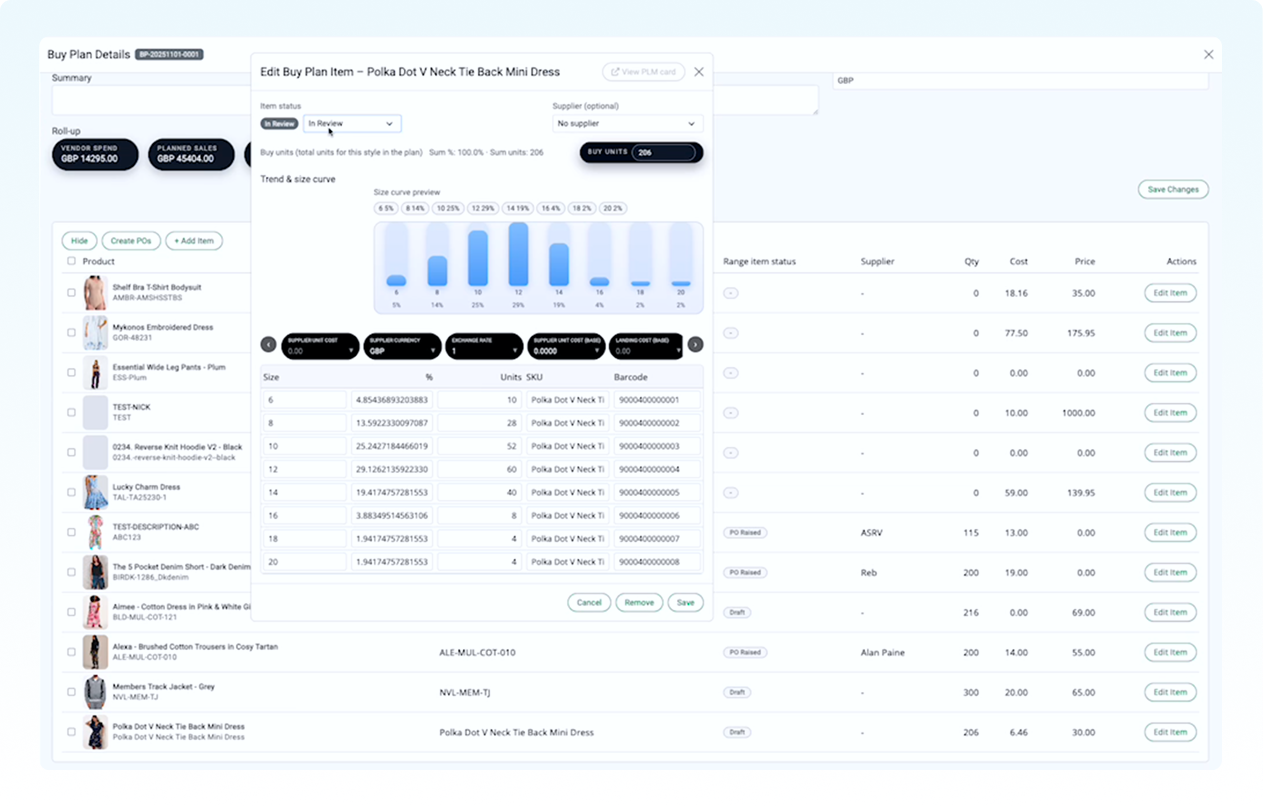
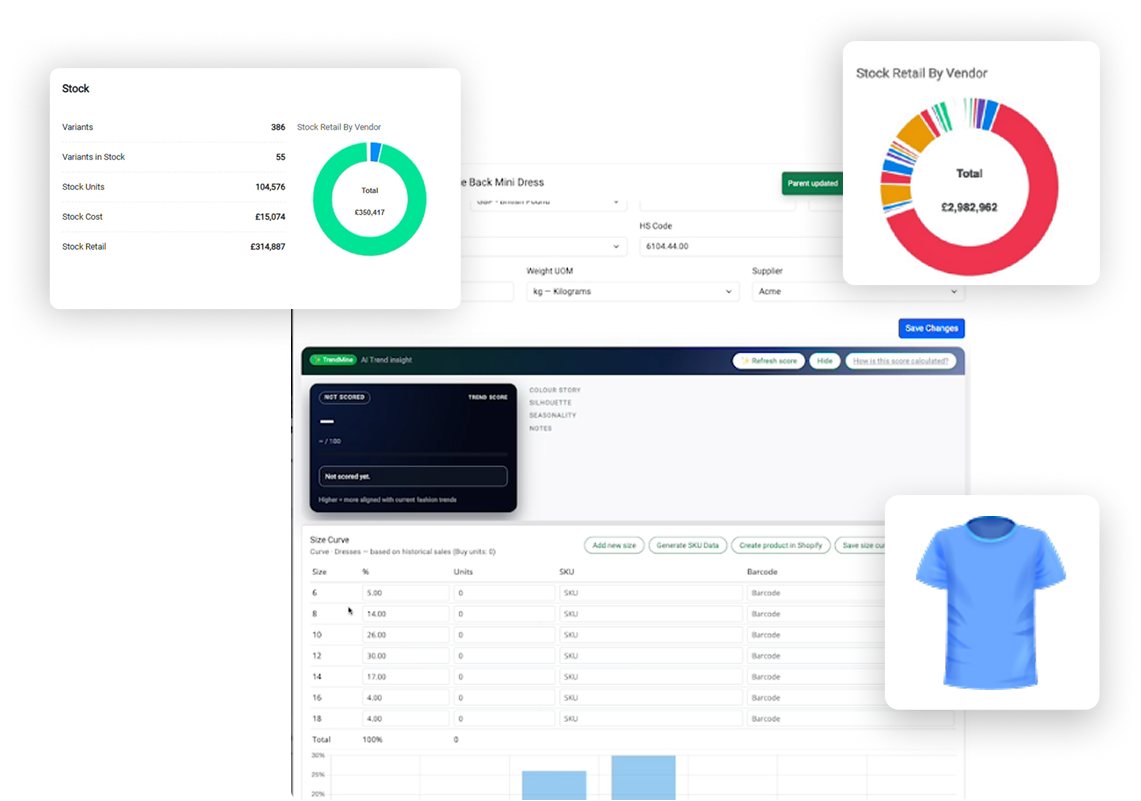
ForecastMine accelerates AI-powered forecasting and demand planning for global ecommerce merchants. The software analyzes sales history, seasonality, product attributes, and supplier lead times to generate precise SKU-level forecasts.
This helps businesses:
- Predict demand using real-time sales data
- Adjust forecasts for seasonal trends and promotions
- Exclude distorted data such as stockouts or one-off orders
- Maintain optimal stock levels across channels
- Generate AI demand forecasts with actionable purchasing recommendations
Built for Shopify Inventory Management and Ecommerce Brands
ForecastMine introduces new AI forecasting and demand planning capabilities for Shopify sellers and ecommerce brands managing complex product catalogs. This helps ensure products stay available during launches, promotions, and peak demand periods.
Retail and fashion Shopify merchants can automate planning and purchasing to:
- Reduce overstock
- Cut down markdowns
- Reinvest freed-up capital into growth
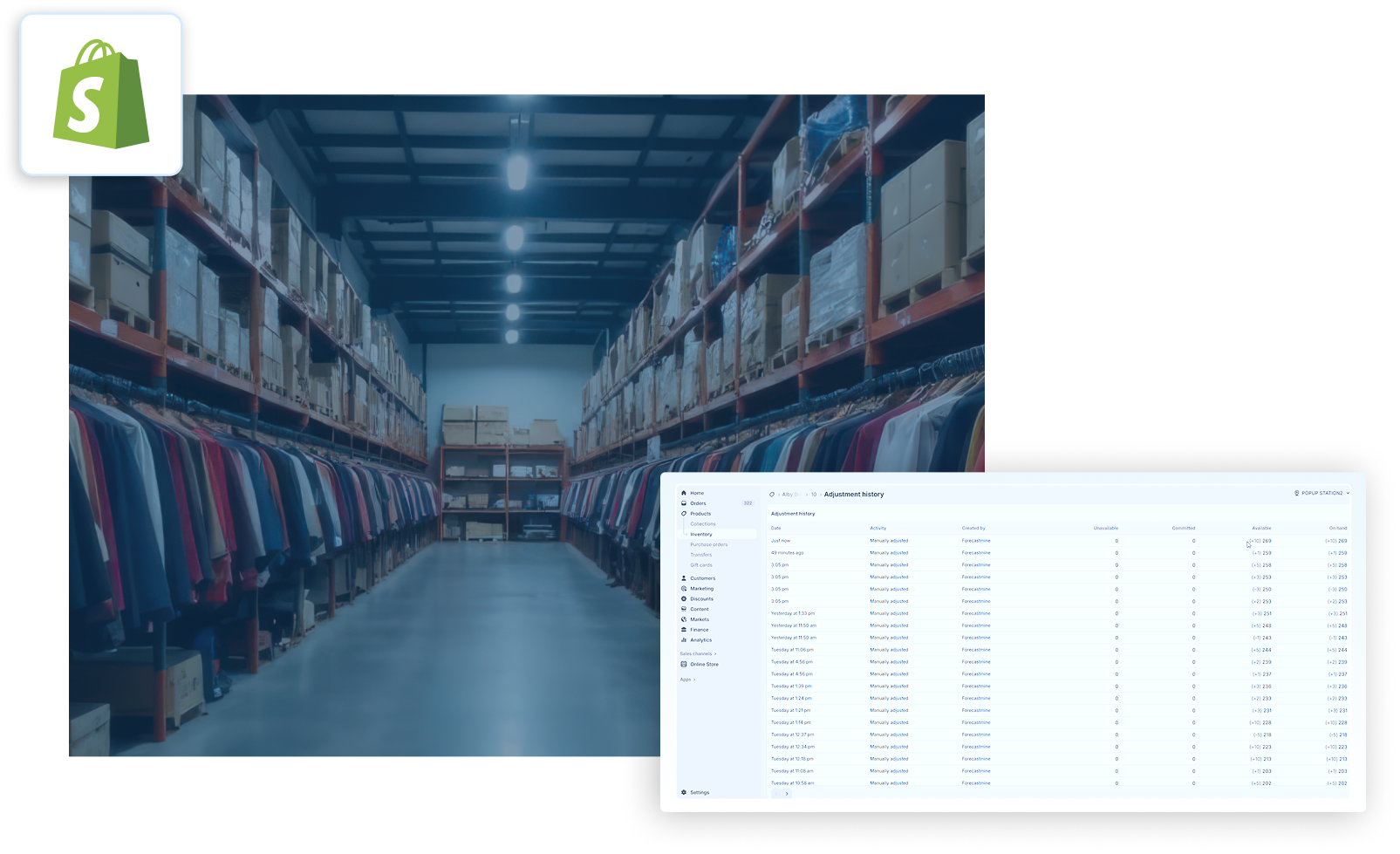
Demand Forecasting Software vs Inventory Planning Software
Plan Inventory Your Way
Every ecommerce brand manages inventory differently. ForecastMine gives teams flexible forecasting, inventory scheduling, and purchasing workflows designed to scale with your operations.

Real-time demand forecasting
Continuously analyze live sales data and seasonal trends to generate accurate SKU-level demand forecasts.
Automated purchase order management
Automatically generate purchase order recommendations and determine what to buy and how much based on forecast demand and supplier lead times.
Multi-location inventory planning
Plan inventory across warehouses, fulfillment centers, and sales channels to maintain optimal stock levels.
Bundle and component forecasting
Forecast demand for bundles and shared components so bundles, kits, and product variants stay in stock without creating excess inventory.
Inventory planning visibility
Track forecasts, purchasing decisions, and inventory performance from one centralized planning environment.
Seamless Integration with Descartes Peoplevox
ForecastMine is fully integrated with the Descartes Peoplevox™ warehouse management system (WMS). This integration connects forecasting, purchasing, inventory, and warehouse operations in one system.
ForecastMine helps teams plan what inventory to buy and when it should arrive. Peoplevox ensures inventory is received, stored, picked, packed, and shipped accurately once it reaches the warehouse. Together, ForecastMine and Peoplevox provide a connected operational foundation for ecommerce growth.
Smarter Demand Forecasting, Real Results
%
Forecast Precision
%
Reduction in Excess Inventory
%
Fewer Missed Sales Opportunities
%
Faster Purchase Order Planning

Frequently Asked Questions
How much does inventory forecasting software cost?
Inventory forecasting software pricing varies depending on order volume, SKU count, and integrations.
Ecommerce brands typically evaluate forecasting platforms based on their ability to reduce overstock, prevent stockouts, and automate purchasing decisions.
What problems does demand forecasting software solve?
Demand forecasting software helps ecommerce brands solve common inventory challenges such as stockouts, excess inventory, slow purchasing cycles, and limited visibility into future demand.
By predicting future product demand, it helps businesses maintain optimal stock levels, automate purchasing, and reduce costly inventory mistakes.
How does ForecastMine compare to spreadsheet inventory planning?
ForecastMine replaces spreadsheet-based inventory planning with AI-powered forecasting and automated purchase order management.
While spreadsheets require manual updates and calculations, ForecastMine continuously analyzes real-time sales data to generate accurate demand forecasts and purchasing recommendations.
What is the best inventory forecasting software for ecommerce brands?
The best forecasting software depends on the complexity of your operations. Popular solutions include Inventory Planner by Sage, Descartes ForecastMine, Prediko, Fabrikatör, and Cogsy.
Ecommerce brands with large SKU catalogs, seasonal demand patterns, and multi-channel sales often require advanced forecasting tools designed specifically for ecommerce inventory planning.
What is the best Shopify inventory management solution?
The best Shopify inventory management solution depends on your operational complexity and sales volume.
Growing ecommerce brands often need tools that combine demand forecasting, inventory planning, and purchase order automation. Platforms like Descartes ForecastMine help Shopify merchants predict demand, manage inventory more accurately, and scale operations without relying on spreadsheets.
What is an inventory planner?
An inventory planner is a tool or system that helps businesses forecast demand, plan inventory purchases, and maintain optimal stock levels.
Modern inventory planners, such as Descartes ForecastMine, combine demand forecasting, inventory planning, and automated purchasing to help ecommerce brands reduce stockouts, avoid excess inventory, and make more accurate buying decisions.
What is a Shopify inventory planner?
A Shopify inventory planner helps ecommerce brands manage inventory across Shopify stores by forecasting demand, planning stock levels, and automating purchasing decisions.
Solutions like Descartes ForecastMine integrate with Shopify to provide real-time demand forecasting, inventory planning, and purchase order automation, helping merchants scale without relying on spreadsheets.
How does real-time demand forecasting improve inventory planning?
Real-time demand forecasting improves inventory planning by continuously updating demand predictions using live sales data.
This allows ecommerce brands to adjust purchasing decisions faster, maintain optimal stock levels, and prevent stockouts or excess inventory as demand changes.