

Key takeaways
-
A warehouse move should solve capacity constraints, not carry existing inefficiencies into a new space. Fix broken processes before the move to avoid scaling problems instead of eliminating them.
-
Warehouse design decisions directly impact picking speed, accuracy, and staff productivity. Poor layout choices often require costly redesigns within months of moving.
-
Strong communication with partners and realistic expectations reduce disruption during a warehouse move. Delays and operational slowdowns are common and should be planned for, not ignored.
- A warehouse move creates an opportunity to modernise your operation with purpose-built warehouse management technology. Descartes Peoplevox™ helps improve inventory accuracy, streamline fulfilment workflows, and provide the visibility needed to scale confidently.
We frequently see growing brands move to a new warehouse, and though it can be a stressful time, we’ve learned some things that may help you with your move.
In this article, we break down why ecommerce businesses outgrow their warehouses, how to prepare your processes before relocating, and what to prioritise to ensure your new warehouse supports long-term growth instead of creating new bottlenecks.
Table of contents
Moving your warehouse: how did we get here?
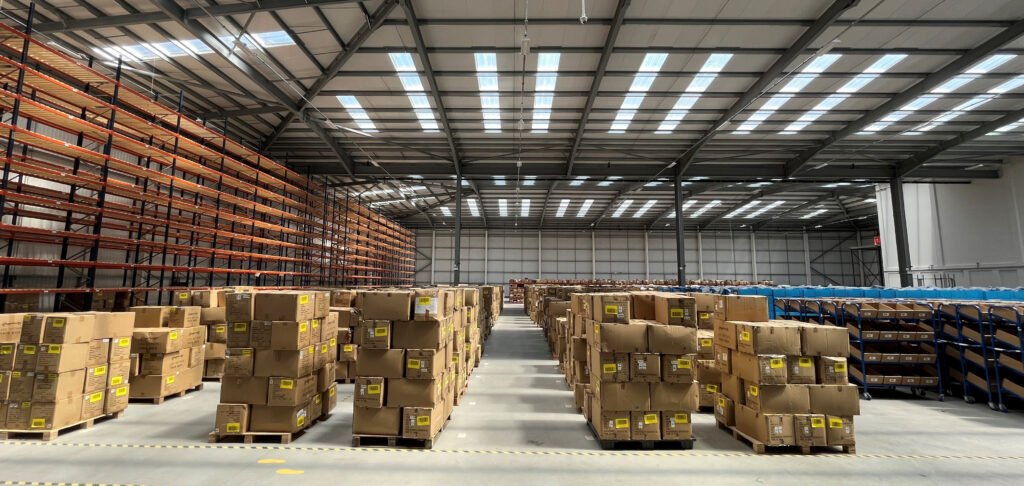
The new warehouse of Peoplevox customer the AYBL Group.
Deciding to move your warehouse operation is not easy. Typically, it’s due to a significant volume increase in your business, which highlights the first bottleneck at goods-in: You can’t put away stock in time, don’t have enough pick face area, and may be employing temporary staff to solve the problem.
This frequently results in matters of concern like:
- This is directly impacting our customer service levels?
- Are we potentially breaching health and safety regulations?
- I don’t know all the people in our warehouse.
- I don’t have a clear idea of what stock we have here.
You can visibly see your people not knowing which pick-face to go to for which product, and probably picking directly out of bulk. Or there is no stock in the pick-face and they are then hunting around in bulk for the stock.
These visible issues are usually indicators that you need a new warehouse. Sometimes, a more proactive approach is taken, such as when a retailer foresees or knows they will receive a huge volume increase, and their current warehouse won’t be fit for purpose. However, this is a rarity.
A new warehouse is not your silver bullet: get set up for success
It’s easy to put your new warehouse on a pedestal and think it will solve all of your problems. However, a new warehouse won’t fix broken processes. You need to start thinking about the processes you currently have in place that are completely broken and come up with solutions before you move into your new space. The last thing you want to do is migrate bad habits into the new space.
You should see this as an evolution, not a revolution, so pick the biggest pain point first. It could be your goods-in process, order fulfilment, pick-pack-ship, inventory management, returns, or replenishment.
Fix that before you move and then prioritise a list of other issues to work through. Don’t be afraid to contact technology providers as you plan your warehouse move. Most partners will be used to building systems for new warehouses and will enable you to start on the right foot in the new space. You can also lean on them for their expertise.
It probably won’t go smoothly
Moving warehouses can disrupt normal business operations, and it can take time for operations to return to normal. Many retailers report experiencing disruptions to their operations during the move.
Delays are also common: very often retailers who had moved or were planning to move their warehouses reported experiencing delays in the process. These delays were due to a variety of factors, including construction issues, permit delays, and supply chain disruptions.
Make sure you have an extremely well-founded relationship with all your key partners to ensure you are kept completely up to date with the move and know all the potential risks and blockers that are in play.
Warehouse design
Unless you have an expert in-house, find help with this. On countless occasions we have seen retailers design their warehouse only to have to redesign it in less than six months after moving.
There needs to be a high degree of flexibility and also a bespoke nature of the design tailored to your specific needs. That could be how big your returns racking is, how much bulk storage you need, what picking strategies you are deploying, and therefore, how your bins are laid out.
To illustrate this point, consider the example of an ecommerce business that had 70% bulk and 30% pick-face storage in their warehouse. Initially, they couldn’t understand why we were recommending they create more pick-facing. However, after consulting with us for three and a half hours, they realised that our recommendations made sense.
As a result, they had to adjust their racking and shelving, which required additional spending on the warehouse to accommodate the changes. This illustrates the importance of careful planning and consultation when designing a warehouse, especially when it comes to accommodating the unique needs of ecommerce operations.
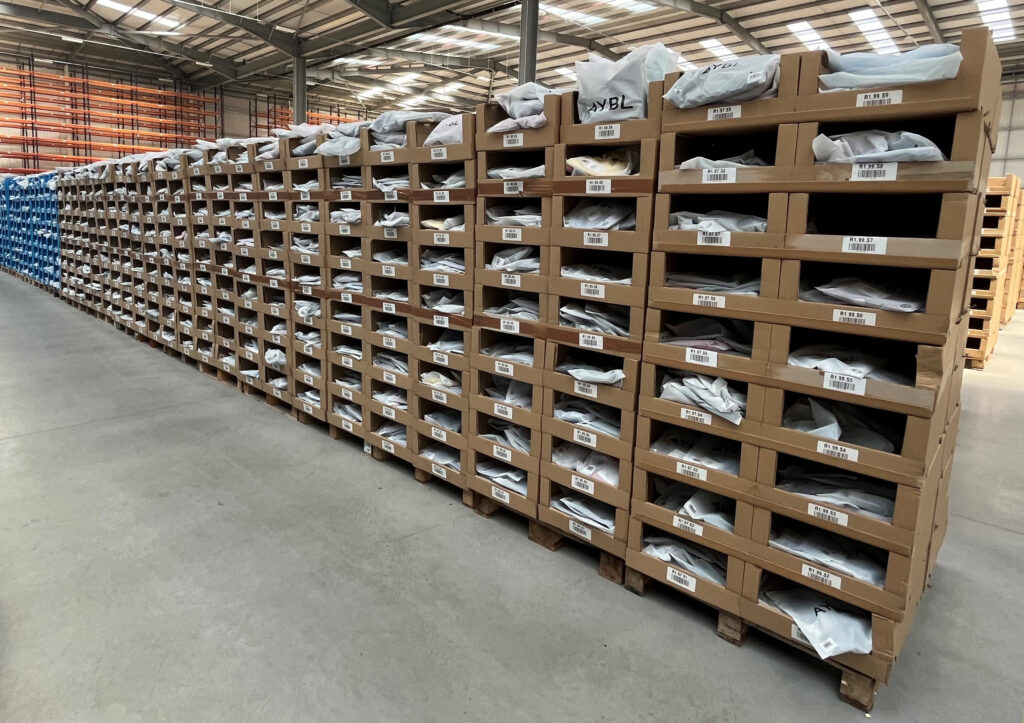
Pick-face at the AYBL Group’s warehouse.
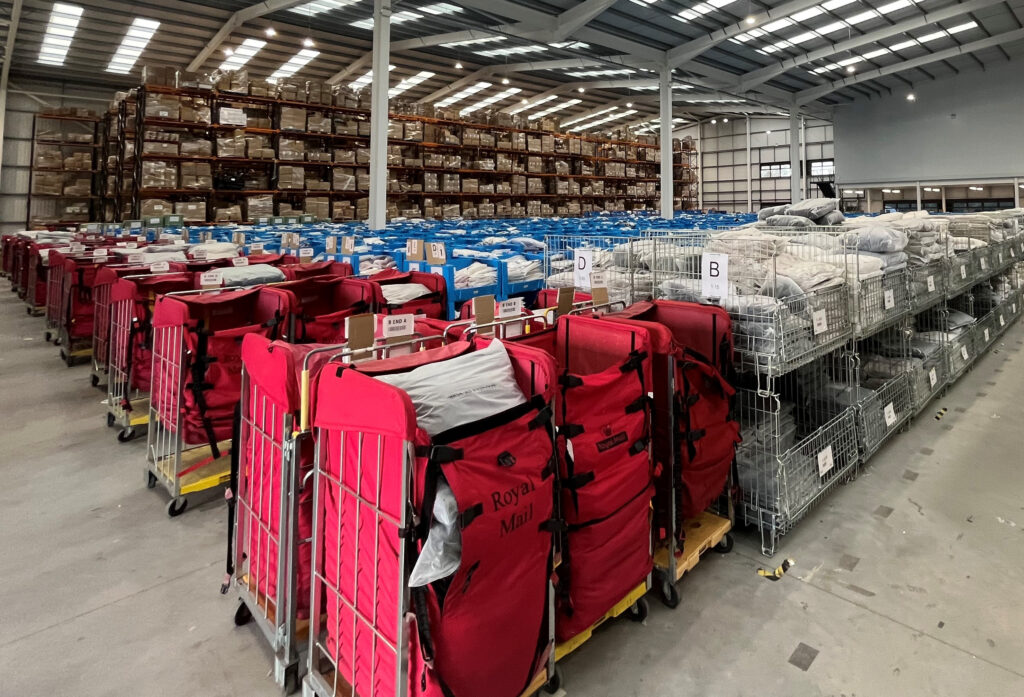
Trolleys for shipping provider at Manière De Voir.
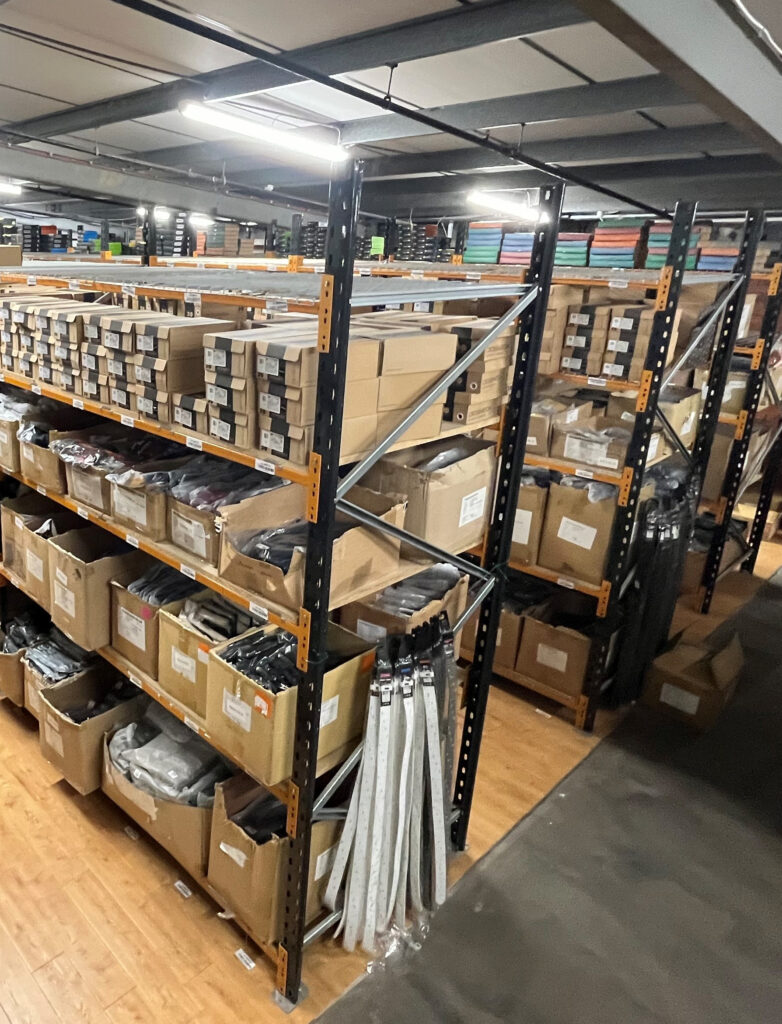
An example of chaotic storage at The Boi Group.
Seeing is believing
There is something to behold walking through a serene warehouse that is running smoothly. There is no panic, minimal stress, and the warehouse manager looks calm(ish).
Check out Natural Baby Shower and their pristine warehouse:
Walking the floor also allows you to ask about blockers your warehouse team ran into, things that went wrong, and how they overcame them. This is invaluable information to help your team move quicker.
Over the years, we have designed hundreds of new warehouses and done the same number of implementations. If you want to see one of these warehouses in action, just get in touch!
Book a demo today to discover how Peoplevox can solve your warehouse management challenges.
Moving warehouse FAQs
How far in advance should you start planning a warehouse move?
Most ecommerce businesses should begin planning at least six to twelve months in advance. This gives you time to evaluate operational gaps, redesign workflows, stress-test capacity assumptions, and align technology, staffing, and partners before inventory starts moving.
Should warehouse staff be involved in the planning process?
Yes. Warehouse staff understand day-to-day friction points better than anyone else. Involving supervisors and floor staff early helps uncover inefficiencies that may not be visible at a management level and increases adoption of new layouts and processes after the move.
What technology changes should be considered during a warehouse move?
A warehouse move is an ideal time to reassess whether your current systems still meet your needs. Many businesses use the transition to upgrade or implement tools that improve inventory visibility, picking accuracy, and labor efficiency, rather than trying to retrofit systems after the move is complete.
How can you minimise inventory discrepancies during a warehouse move?
Before stock is transferred, perform a full inventory audit and resolve any outstanding discrepancies. Establish clear processes for stock counting, labelling, and location tracking throughout the move. Maintaining accurate inventory records during the transition helps prevent stock losses, order delays, and customer service issues after go-live.